

 Send Email
 Whatsapp


Introduction
Buying Pv Extension Cables from overseas factories can lower balance-of-system costs, but the savings depend on more than comparing unit prices. Material volatility, cable specifications, certification requirements, minimum order quantities, logistics, duties, and supplier quality controls all shape the true landed cost and long-term project value. This article explains where the biggest cost drivers sit, how procurement teams can avoid hidden expenses, and which sourcing tactics help protect both margins and performance. By the end, readers will have a practical framework for evaluating overseas suppliers, negotiating more effectively, and reducing cable costs without increasing technical or compliance risk.
How can sourcing PV extension cables improve project margins
Sourcing photovoltaic (PV) extension cables from overseas manufacturers presents a direct pathway to optimizing utility-scale and commercial solar project margins. As the exponential growth of global solar installations drives demand for cost-efficient balance of system (BOS) components, procurement teams are increasingly looking beyond domestic suppliers. By leveraging global manufacturing hubs, developers can significantly reduce capital expenditures without compromising system reliability or energy yield.
Which cost drivers matter most
Understanding the primary financial variables is essential for any strategy aimed at sourcing PV extension cables cost-saving. Raw material expenses dominate the manufacturing profile, with high-purity tinned copper accounting for 60% to 70% of the total unit cost. Fluctuations in the London Metal Exchange (LME) copper index directly impact factory pricing models. Additionally, the choice of insulation and jacketing materials, typically cross-linked polyethylene (XLPE) or specialized polymers, influences both durability and baseline price. Factory overhead, labor arbitrage in overseas manufacturing hubs, and production efficiency constitute the remaining cost variables. By timing large volume purchases during favorable copper market dips, buyers can secure substantial financial advantages.
How should buyers define requirements clearly
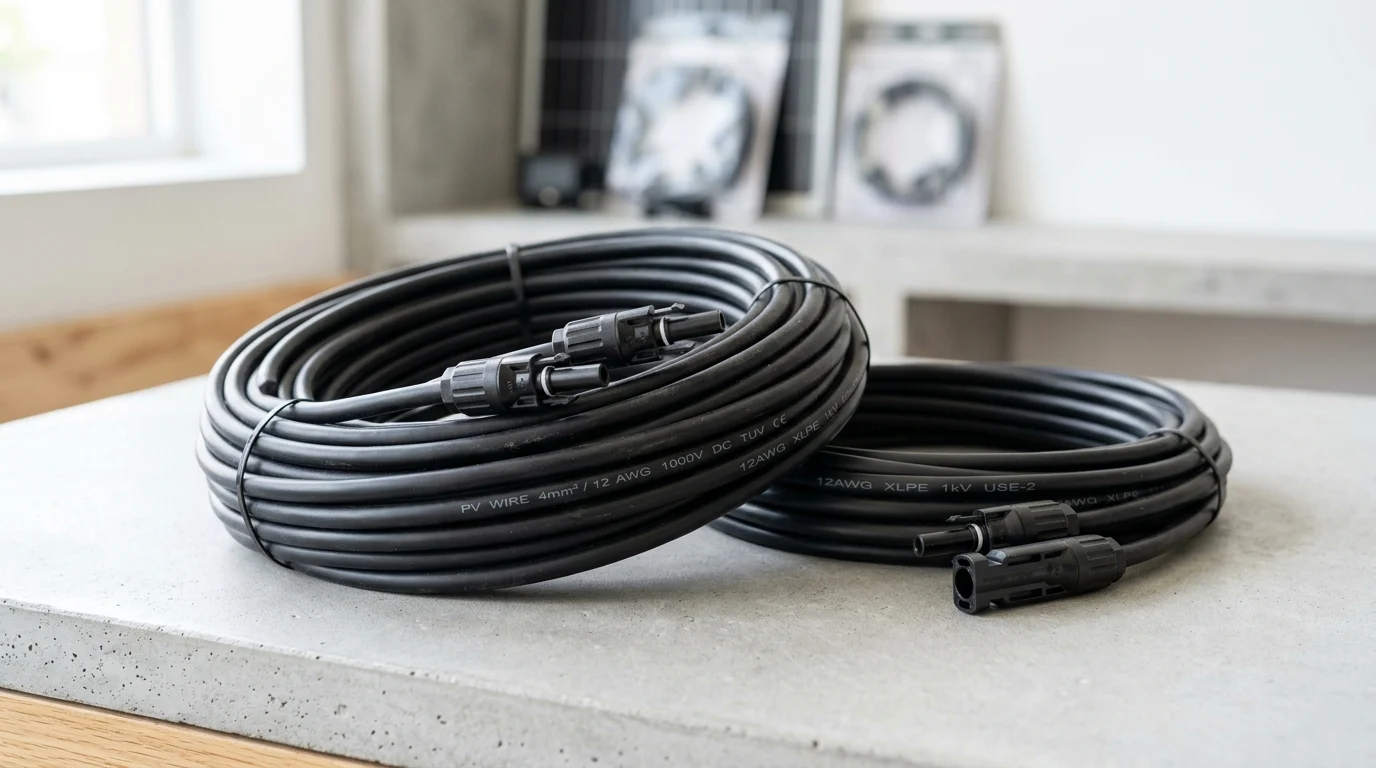
Precision in technical specifications prevents costly over-engineering and eliminates the risk of under-performing components. Buyers must define exact cross-sectional areas based on precise system amperage requirements; for instance, specifying 4mm² (12 AWG) instead of defaulting to 6mm² (10 AWG) when safe and compliant can yield immediate bulk material savings of 15% to 20%.
Furthermore, procurement teams should clearly outline environmental tolerances, such as UV resistance, moisture barriers, and operating temperature ranges from -40°C to +120°C. Overseas factories typically require Minimum Order Quantities (MOQs) starting between 5,000 and 10,000 meters for custom jacket colors, specialized connectors, or specific pre-cut lengths. Defining these parameters upfront limits revision cycles and accelerates production timelines.
What should buyers compare when selecting suppliers
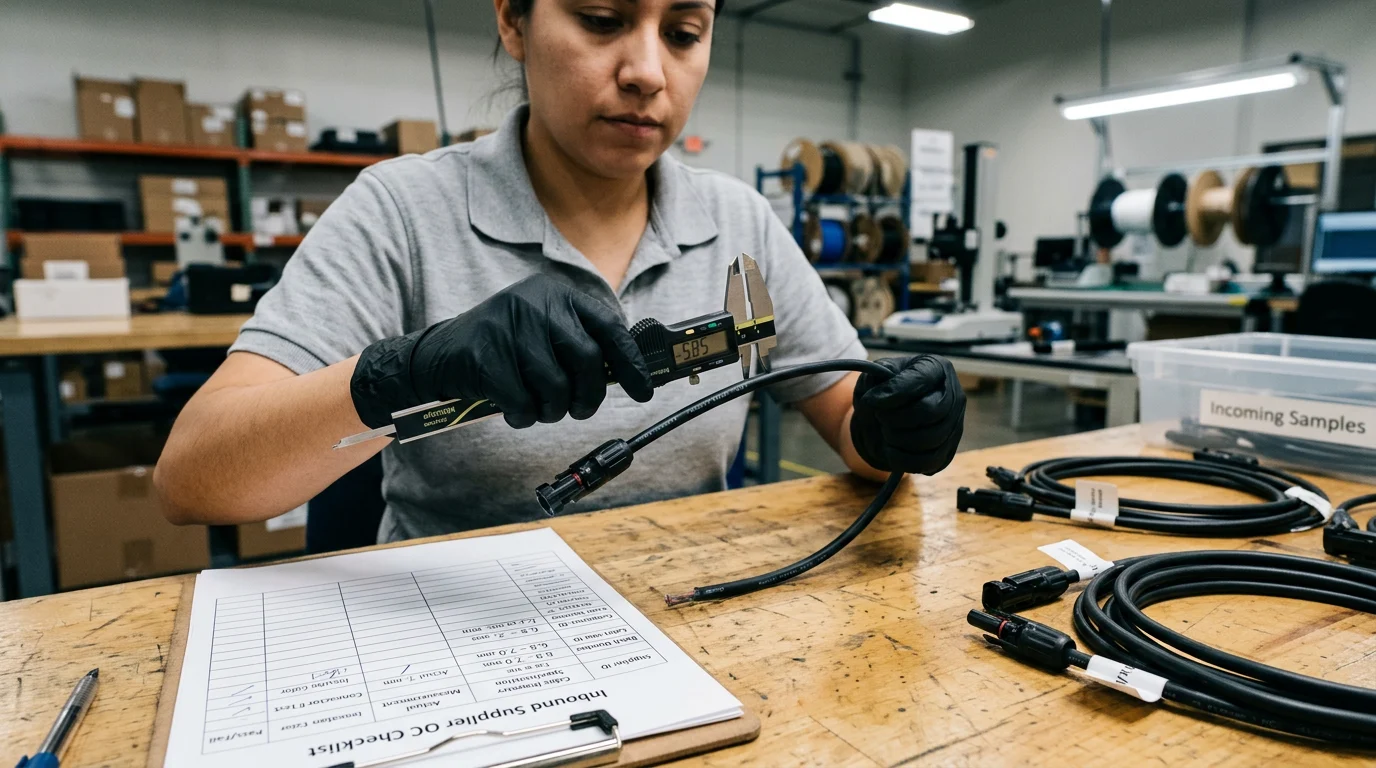
Selecting the right manufacturing partner requires a rigorous evaluation of factory capabilities, quality control systems, and regulatory adherence. A systematic comparison ensures that initial upfront savings are not negated by premature component failure, safety hazards, or compliance penalties during grid interconnection.
Which criteria support factory selection
Effective factory audits should prioritize production capacity, automation levels, and established quality management systems. Buyers must verify ISO 9001 certifications and assess the manufacturer's testing infrastructure, including in-house aging ovens, high-voltage testing chambers, and cold-bend apparatuses. Advanced extrusion automation minimizes human error, ensuring consistent insulation thickness across massive production runs.
A reliable tier-one supplier should demonstrate a historical defect rate maintained strictly below 0.1% (1,000 PPM). Additionally, evaluating a factory's raw material sourcing network provides insight into its ability to absorb supply chain shocks, maintain consistent delivery schedules, and avoid substituting inferior metals during copper price spikes.
How do compliance, test reports, and lifecycle performance compare
Solar installations demand rigorous adherence to international standards to guarantee safety and longevity. Manufacturers must provide verifiable test reports from recognized independent bodies like TÜV Rheinland or Underwriters Laboratories (UL).
| Standard | Voltage Rating | Max Conductor Temp | Typical Lifespan | Primary Market |
|---|---|---|---|---|
| EN 50618 (H1Z2Z2-K) | 1500V DC | 120°C (20,000 hours) | 25 Years | Europe / Global |
| UL 4703 (PV Wire) | 1000V / 2000V DC | 90°C / 105°C | 25+ Years | North America |
Comparing these compliance metrics ensures the selected cables match regional grid requirements and local electrical codes. For example, a standard EN 50618-compliant cable is engineered to withstand continuous 1500V DC exposure and severe environmental stress for a minimum 25-year lifecycle. Verifying these lifecycle performance metrics directly protects the long-term Return on Investment (ROI) of the entire solar array.
Which sourcing and logistics strategies reduce total cost
Beyond the unit price of the cables, the total landed cost is heavily influenced by shipping logistics, import duties, and strategic negotiation tactics. Effective procurement requires a holistic view of the entire supply chain to navigate geopolitical trade complexities and protect project profit margins.
How can buyers lower landed cost through negotiation
Optimizing freight logistics is critical for bulky, heavy commodities like copper cabling. Buyers can lower landed costs by negotiating favorable Incoterms, such as Free on Board (FOB) rather than Ex Works (EXW), effectively shifting origin-port handling and loading costs to the supplier. Consolidating shipments into Full Container Loads (FCL) drastically reduces per-unit freight expenses.
For context, shipping a standard 20-foot container—which safely holds approximately 300,000 meters of standard 4mm² PV cable on wooden spools—via ocean freight can reduce per-meter transportation costs by up to 40% compared to Less than Container Load (LCL) shipping or expedited air freight. Strategic tariff classification and leveraging applicable free trade agreements also minimize unexpected customs duties at the destination port.
What decision framework should procurement teams use
Procurement teams should adopt a Total Cost of Ownership (TCO) framework rather than evaluating factory bids solely on the lowest initial unit price. This comprehensive model factors in the purchase cost, ocean freight, inland transport, import taxes, historical defect rates, and potential warranty claim expenses.
Decision-makers must also meticulously account for production lead times, which typically range from 3 to 5 weeks at high-capacity overseas facilities, plus an additional 4 to 6 weeks for transoceanic transit and customs clearance. Integrating a strategic buffer stock allowance within this TCO framework mitigates supply chain disruptions, ensuring that highly synchronized project installation schedules are not derailed by unforeseen logistical bottlenecks.
Key Takeaways
- The most important conclusions and rationale for sourcing PV extension cables cost-saving
- Specs, compliance, and risk checks worth validating before you commit
- Practical next steps and caveats readers can apply immediately
Frequently Asked Questions
What saves the most money when sourcing PV extension cables overseas?
Focus on conductor size, copper timing, and landed cost. Matching 4mm² instead of over-specifying 6mm² can cut material cost 15%–20% when system requirements allow.
How can buyers avoid paying for unnecessary cable specifications?
Give the factory exact amperage, voltage, temperature range, UV exposure, connector type, and cut length. Clear specs reduce redesigns, prevent over-engineering, and speed production.
Which factory checks matter most before placing a bulk PV cable order?
Verify ISO 9001, in-house testing capability, automation level, and a defect rate below 0.1%. Ask for recent audit records and sample test data before approving production.
Why are TÜV or UL test reports important for PV extension cables?
They confirm the cable meets required standards such as EN 50618 or UL 4703. This helps avoid compliance issues, failed inspections, and premature replacement costs.
How can shipping strategy reduce total overseas cable sourcing cost?
Compare full landed cost, not just unit price. Consolidate orders, confirm Incoterms early, and plan around MOQ thresholds to lower freight, customs, and rush-shipping expenses.