

 Send Email
 Whatsapp


Introduction
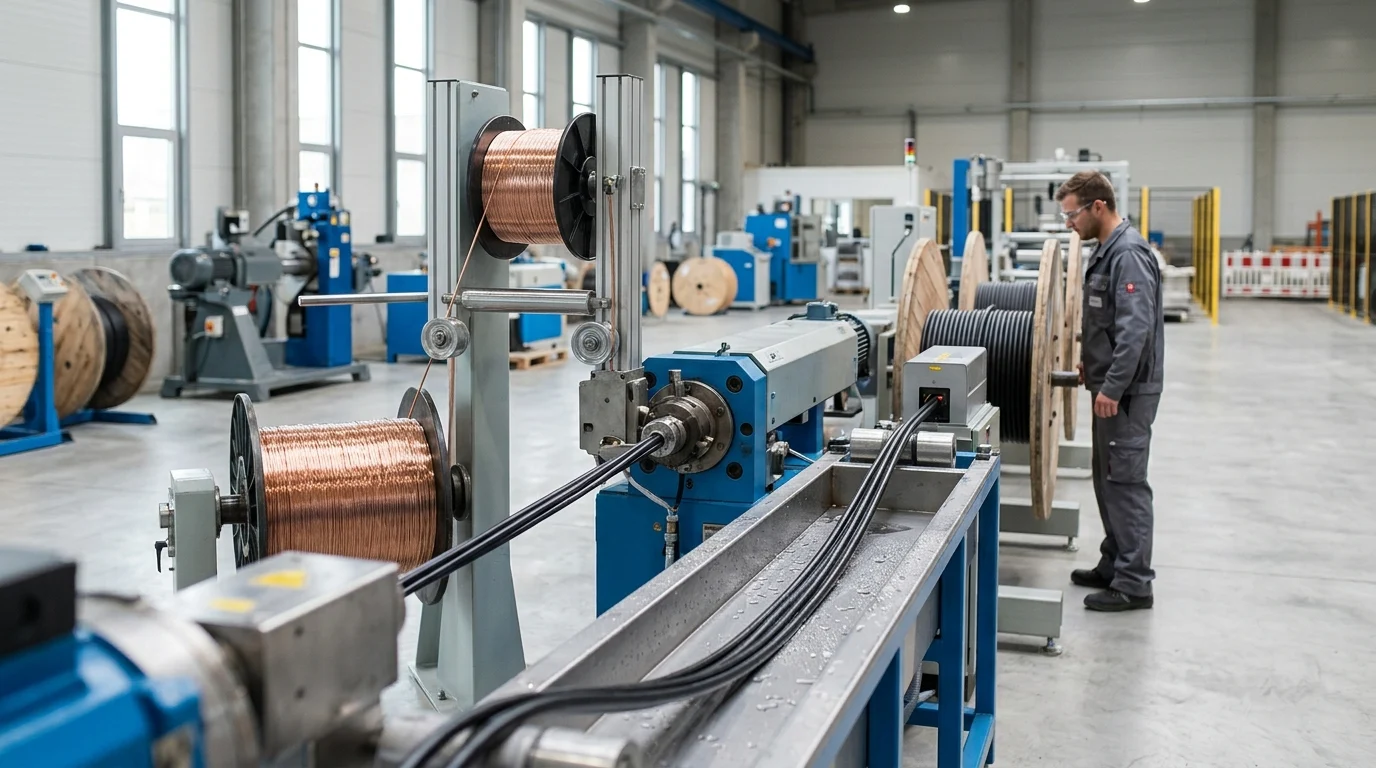
Reliable photovoltaic DC cables are not defined by specifications alone; their real performance depends on how conductors, insulation, shielding, and jacketing are made and controlled at each production stage. This article explains the manufacturing techniques that most influence electrical efficiency, thermal stability, weather resistance, and long service life in solar installations. You will see how material selection, conductor stranding, extrusion accuracy, cross-linking, and quality testing work together to reduce losses, prevent premature failure, and meet demanding 1500V DC and outdoor durability requirements. With that foundation, the discussion can move into the specific processes and controls that distinguish high-quality Photovoltaic Cable production.
Why photovoltaic DC cable manufacturing matters
The transition to renewable energy relies heavily on the durability and efficiency of solar infrastructure. At the heart of this physical infrastructure are the cables that transport direct current (DC) from solar panels to combiner boxes and inverters. The precision and quality of the manufacturing process directly dictate the safety, electrical efficiency, and long-term viability of the entire photovoltaic array.
Performance, bankability, and lifecycle cost
Utility-scale solar projects are financially modeled on functional lifespans of 25 to 30 years. Achieving this longevity requires components that can withstand severe environmental stressors without degrading. High-quality manufacturing minimizes electrical resistance, keeping DC transmission losses strictly below the industry standard limit of 1% to 2%. Furthermore, the bankability of a solar project—its ability to secure favorable financing—depends heavily on utilizing tier-1 components.
Cables must be engineered to endure extreme temperature fluctuations, typically rated for ambient conditions from -40°C up to continuous conductor temperatures of +120°C. Substandard manufacturing compromises these thermal tolerances, leading to premature insulation failure, ground faults, and increased lifecycle costs through frequent replacements and system downtime.
Cable types, constructions, and applications
Modern solar arrays predominantly utilize single-core, double-insulated cables designed for high-voltage applications, particularly the now-standard 1500V DC systems. The construction typically features fine-stranded tinned copper conductors, which provide superior flexibility and corrosion resistance compared to bare copper. Common cross-sectional areas range from 4mm² to 10mm², selected based on the required current-carrying capacity of the string.
The insulation and outer sheath are formulated from cross-linked polyolefin (XLPO) materials, delivering exceptional resistance to ultraviolet (UV) radiation, ozone, and mechanical abrasion. Depending on the installation environment—whether floating solar reservoirs, rooftop arrays, or arid desert farms—manufacturers must adjust the polymer formulations to enhance specific properties like water resistance or flame retardancy.
Key photovoltaic DC cable manufacturing techniques
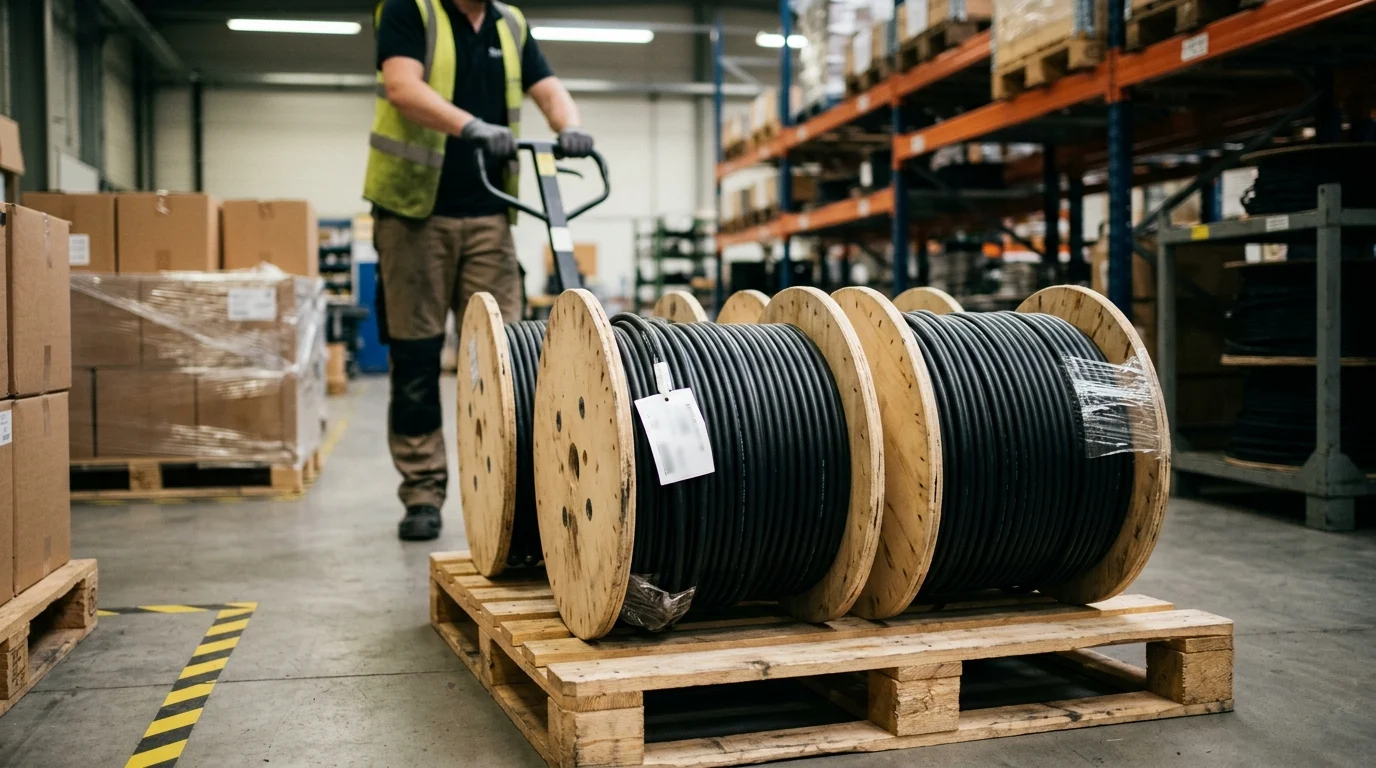
Producing cables capable of surviving decades of harsh environmental exposure requires advanced photovoltaic DC cable manufacturing techniques. The evolution of these techniques has allowed manufacturers to move away from legacy PVC materials, improving production efficiency while simultaneously elevating the physical and electrical integrity of the finished product to meet modern solar demands.
Stranding, compounding, and extrusion
The production cycle begins with precision wire drawing and stranding. To achieve the required flexibility for field installation (Class 5 standard), hundreds of fine, annealed tinned copper wires are tightly bundled. Following stranding, the compounding and extrusion phases apply the protective XLPO layers. Modern facilities often utilize tandem extrusion lines, applying both the inner insulation and the outer jacket simultaneously at high speeds ranging from 300 to 500 meters per minute.
The most critical step is cross-linking, which transforms the thermoplastic polymer into a robust thermoset material. High-end manufacturing relies on electron beam (e-beam) irradiation, where the cable passes through an accelerator that bombards the polymer with a precise radiation dose, typically between 10 and 15 Mrad. This creates a dense, three-dimensional molecular network that vastly improves thermal and mechanical stability.
Comparison criteria for manufacturing methods
When evaluating production methods, the choice of cross-linking technology is the primary differentiator in the market. While e-beam irradiation represents the premium standard for utility-scale applications, chemical cross-linking (such as the silane method) is also utilized for different market segments.
| Feature | Electron Beam (E-Beam) Cross-Linking | Silane (Chemical) Cross-Linking |
|---|---|---|
| Mechanism | High-energy electron bombardment | Moisture and heat curing |
| Temperature Resistance | Exceptional (up to 120°C continuous) | Moderate to High (up to 90°C continuous) |
| Production Speed | Very fast (inline or offline accelerators) | Slower (requires curing time in water/sauna) |
| Environmental Impact | Clean process, no chemical residues | Generates some chemical byproducts |
| Ideal Application | Utility-scale, harsh environments | Residential, cost-sensitive projects |
Selecting the appropriate method depends on project scale, budget constraints, and the severity of the expected installation environment.
How to evaluate photovoltaic DC cable manufacturing
Procuring reliable cabling requires rigorous auditing of the supplier's production environment. Buyers and project developers must assess how a manufacturer implements quality assurance protocols and manages the supply chain from raw materials to the finished spool, mitigating the financial risks of fire hazards and ground faults.
Process controls, in-line testing, and traceability
Elite manufacturing facilities integrate continuous process controls to eliminate defects before the cable is spooled. In-line laser micrometers monitor the cable diameter in real-time, ensuring the insulation thickness remains consistent and concentricity stays above the strict 85% threshold mandated by standard frameworks like EN 50618 and Iec 62930. Falling below this threshold can cause critical sealing failures when mating cables with MC4 connectors. Any deviation triggers automated line adjustments.
Additionally, high-voltage spark testing is performed directly on the extrusion line. The cable is subjected to an AC spark test between 6kV and 10kV to instantly detect any microscopic pinholes or bare spots in the insulation. Comprehensive traceability systems are also critical; every spool should feature a unique barcode linking it to the specific production batch, copper source, and extrusion operator, ensuring total accountability.
Decision factors for manufacturers and buyers
When selecting a manufacturing partner, buyers must weigh several logistical and commercial factors alongside technical capabilities. Compliance with international standards, evidenced by certifications such as TÜV or UL 4703, is non-negotiable for grid-tied systems. Supply chain agility is another major factor tied to raw material availability; top-tier manufacturers typically maintain lead times of 2 to 4 weeks, though this can stretch during periods of high global demand or copper price volatility.
Buyers must also consider Minimum Order Quantities (MOQs), which generally start around 5,000 meters for standard 4mm² or 6mm² cross-sections, but can increase significantly for custom jacket colors or specialized polymer blends. Ultimately, investing in cables produced under stringent quality controls yields a lower total cost of ownership by preventing catastrophic system failures over the asset's lifespan.
Key Takeaways
- The most important conclusions and rationale for photovoltaic DC cable manufacturing techniques
- Specs, compliance, and risk checks worth validating before you commit
- Practical next steps and caveats readers can apply immediately
Frequently Asked Questions
Why is e-beam cross-linking preferred for photovoltaic DC cables?
It creates a stronger XLPO structure, supporting up to 120°C continuous conductor temperature, faster production, and better long-term durability in utility-scale or harsh environments.
What conductor material is best for photovoltaic DC cable manufacturing?
Fine-stranded tinned copper is typically preferred because it improves flexibility, resists corrosion, and supports reliable installation in rooftop, desert, and floating solar systems.
Which cable size is commonly used in solar DC strings?
Common sizes are 4mm² to 10mm². The right choice depends on string current, voltage drop limits, and installation length.
How can buyers evaluate a photovoltaic DC cable manufacturer?
Check conductor quality, XLPO insulation consistency, cross-linking method, production line control, and compliance with 1500V DC and long-term environmental performance requirements.
When is silane cross-linking suitable for photovoltaic DC cables?
It is often suitable for residential or cost-sensitive projects where conditions are less severe and a 90°C continuous temperature rating is acceptable.