

 Send Email
 Whatsapp


As photovoltaic projects scale faster and operate in tougher environments, the performance of every component matters—especially the cable infrastructure that carries DC power across the array. The recent PNTTECH solar industry gathering brought together more than 250 delegates, engineers, suppliers, and industry leaders to examine how better system design can improve efficiency, durability, and long-term project value. Discussions centered on practical advances such as 1500V DC architectures, which may reduce power loss by up to 2.5%, and the growing demand forSolar Cable solutions that can withstand UV exposure, moisture, and temperatures from -40°C to +90°C over a 25-year service life.
PNTTECH Solar Industry Seminar Overview
We recently concluded the highly anticipated 2026 PNTTECH Solar Industry Lawn Seminar, an event that marked a significant milestone for renewable energy professionals worldwide. Gathered in an expansive, open-air setting that perfectly reflected our commitment to the natural environment, industry leaders, technical engineers, and global suppliers convened to share vital insights on the rapidly evolving photovoltaic landscape. The atmosphere was charged with optimism as participants engaged in deep discussions regarding the future trajectory of global energy transitions.
Event Background and Purpose
The event formally commenced when Mr. Shen from PNTECH Company took the stage to deliver a compelling and visionary welcome speech. He warmly welcomed and expressed sincere gratitude to all the guests present, emphasizing our collective mission to advance sustainable power generation. He articulated the earnest hope that this salon would establish an efficient communication platform, unite disparate industry forces, and jointly explore the new blue ocean of photovoltaics. His opening remarks injected full confidence into the event, setting a highly collaborative and forward-thinking tone for the 250-plus delegates who traveled from across the globe to participate in this strategic summit.
Key Topics Discussed
Throughout the seminar, our specialized panels focused heavily on the physical infrastructure required to support next-generation photovoltaic power plants. A central and recurring theme was the urgent optimization of direct current transmission efficiency across large-scale solar arrays. Technical experts highlighted that upgrading to modern 1500V DC systems can reduce overall power loss by up to 2.5% compared to legacy 1000V architectures, a massive gain in utility-scale operations. Consequently, the demand for highly durable and efficient solar cable solutions dominated the technical roundtable discussions. We also explored emerging trends in floating solar farms and the critical necessity for advanced ultraviolet-resistant wiring capable of withstanding extreme environmental stressors over decades of continuous use.
Solar Cable Definitions and Specifications
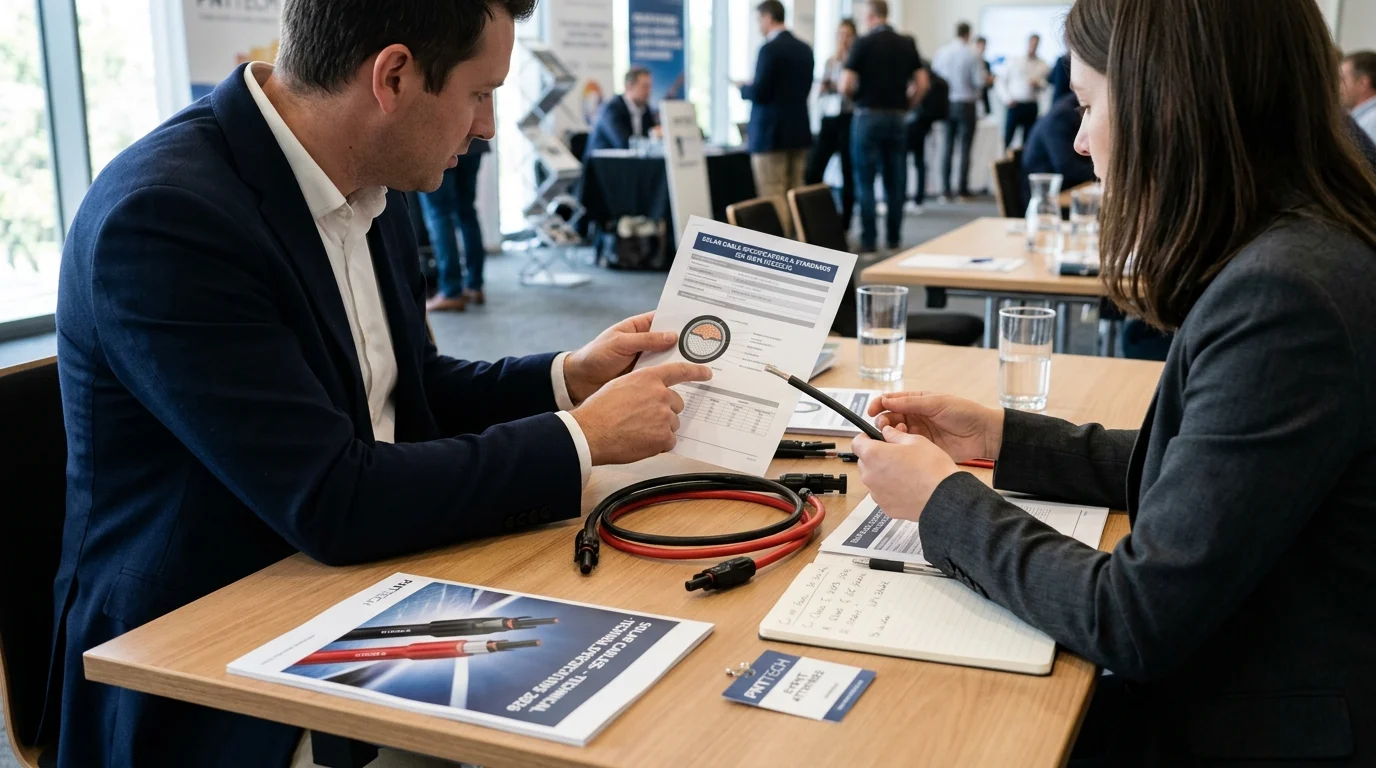
A major takeaway from our focused technical sessions was the absolute necessity of understanding precise component specifications before breaking ground on any new project. As we design larger, more complex, and highly efficient solar arrays, the terminology and performance metrics of the underlying wiring become increasingly critical to the overall success and safety of the installation.
Core Solar Cable Terms
When we discuss a standard solar cable, we are specifically referring to specialized wiring engineered exclusively for the direct current side of a photovoltaic system. Unlike standard electrical building wires, these advanced cables utilize cross-linked polyolefin (XLPO) for both insulation and outer jacketing. This unique material provides exceptional resistance to ozone degradation, harsh UV radiation, and extreme weather fluctuations. We frequently use fine-stranded tinned copper conductors in these applications to prevent oxidation and ensure maximum long-term conductivity in damp environments. Industry standards dictate that these cables must maintain their physical and electrical integrity for a minimum operational lifespan of 25 years, enduring temperature extremes ranging from -40°C to +90°C without catastrophic degradation.
Specification Comparison Guide
To assist engineers, project managers, and procurement teams in making informed decisions, we have compiled a specification comparison guide based on the rigorous EN 50618 (H1Z2Z2-K) standard discussed extensively during the seminar. Selecting the correct cross-sectional area is absolutely vital for minimizing voltage drop and preventing dangerous thermal overload across the system.
| Cross-Section | Max Current Rating (at 60°C) | Max Conductor Resistance (at 20°C) | Outer Diameter Range |
|---|---|---|---|
| 4.0 mm² | 55 A | 5.09 Ω/km | 5.4 - 6.6 mm |
| 6.0 mm² | 70 A | 3.39 Ω/km | 6.0 - 7.4 mm |
| 10.0 mm² | 98 A | 1.95 Ω/km | 7.2 - 8.8 mm |
For the vast majority of residential and commercial rooftop installations, the 4.0 mm² variant provides an optimal balance of physical flexibility, cost-effectiveness, and adequate current-carrying capacity. However, utility-scale ground mounts operating at the higher 1500V DC threshold frequently require 6.0 mm² or 10.0 mm² cables to safely manage the increased amperage and mitigate power loss over significantly longer transmission distances.
Practical Guidance for Solar Cable Buyers
Transitioning from technical specifications to practical procurement strategies, our seminar concluded with highly actionable advice for supply chain managers and on-site installation crews. Securing reliable components at scale is just as vital as comprehensively understanding their underlying electrical properties.
Sourcing and Installation Considerations
When actively sourcing a high-quality solar cable, we strongly advise buyers to carefully account for both logistical constraints and physical installation requirements. Standard minimum order quantities (MOQs) in the global manufacturing industry often start at 5,000 meters per specification, though requesting custom jacket colors or specialized rodent-proof armor may easily push this threshold to 10,000 meters or more. Production lead times can fluctuate significantly, generally falling between 3 to 6 weeks depending on volatile raw copper availability and global shipping congestion. During the actual installation process, ground crews must strictly adhere to manufacturer handling protocols. For instance, maintaining a minimum bending radius of at least 4 times the cable's outer diameter is absolutely necessary to prevent invisible micro-cracking in the XLPO insulation, which could otherwise lead to dangerous ground faults.
How to Evaluate Solar Cable Partners
Evaluating a prospective manufacturing partner requires a deep dive that looks far beyond the initial quoted price per meter. We recommend comprehensively auditing potential suppliers based on their verifiable production defect rates, which should strictly remain below a threshold of 0.1% for utility-grade infrastructure projects. Furthermore, a reputable manufacturing partner must readily provide comprehensive, third-party testing documentation. This includes up-to-date TÜV Rheinland or Ul 4703 certifications, definitively proving their products have successfully passed rigorous flame retardancy tests and thermal endurance trials operating at 120°C for a continuous 20,000 hours. By prioritizing these stringent quality controls and establishing highly transparent lines of communication with suppliers, procurement teams can effectively mitigate long-term maintenance risks, ensure regulatory compliance, and guarantee the ultimate financial viability of their renewable energy investments over their decades-long lifecycle.
Key Takeaways
- Evaluate 1500V DC system designs for utility-scale projects because they can reduce power loss by up to 2.5% compared with 1000V architectures.
- Specify solar cables with XLPO insulation and outer jacketing to improve resistance to UV radiation, ozone, and harsh weather exposure.
- Use fine-stranded tinned copper conductors in damp or outdoor PV environments to reduce oxidation risk and support long-term conductivity.
- Plan PV cable procurement around a minimum 25-year operational lifespan to match the durability expectations of modern solar assets.
- Confirm that selected solar cables can operate from -40°C to +90°C before deployment in extreme climates or demanding installation sites.
- For floating solar and other exposed applications, prioritize advanced UV-resistant wiring designed for decades of environmental stress.
Frequently Asked Questions
What was the main focus of the 2026 PNTTECH Solar Industry Lawn Seminar?
The seminar focused on photovoltaic industry trends, especially solar cable performance, DC transmission efficiency, 1500V system upgrades, and durable wiring solutions for large-scale and emerging solar applications.
Why are solar cables important in photovoltaic systems?
Solar cables carry direct current from PV modules and must withstand UV exposure, ozone, moisture, and temperature extremes while maintaining safe, efficient power transmission for decades.
What benefit can 1500V DC systems provide over 1000V systems?
According to the seminar discussions, modern 1500V DC architectures can reduce overall power loss by up to 2.5% compared with legacy 1000V systems in utility-scale solar projects.
What materials are commonly used in high-quality solar cables?
High-quality solar cables often use fine-stranded tinned copper conductors with cross-linked polyolefin insulation and jacketing to improve conductivity, oxidation resistance, UV resistance, and weather durability.
How long should solar cables last in a PV installation?
Industry expectations highlighted in the seminar call for solar cables to maintain physical and electrical integrity for at least 25 years under demanding outdoor operating conditions.