

 Send Email
 Whatsapp


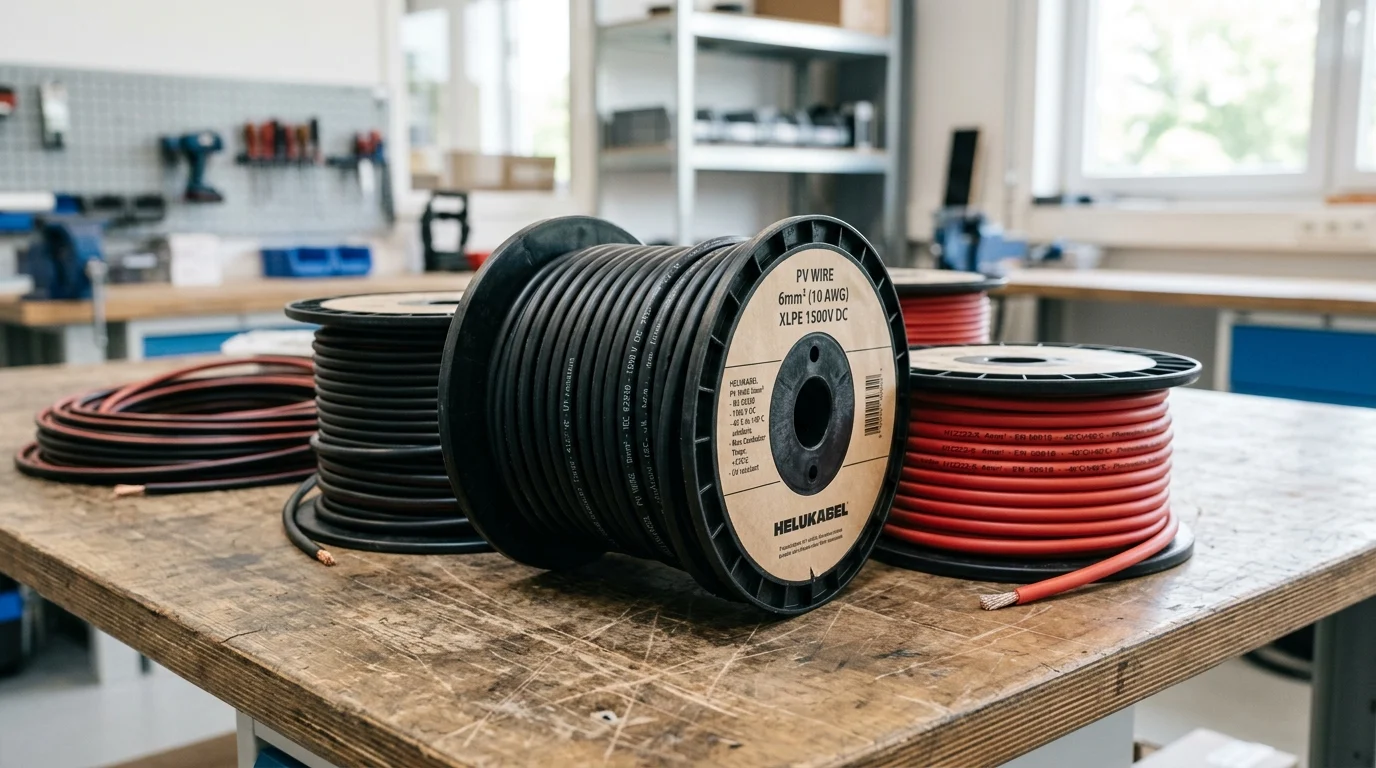
Introduction
Photovoltaic Cables do more than connect modules and inverters; their temperature and weather ratings directly affect ampacity, insulation life, voltage stability, and overall system safety. In real installations, cables face heat buildup from current, intense sunlight, seasonal temperature swings, and moisture exposure that can accelerate degradation if ratings are poorly matched to site conditions. This article explains how thermal limits and environmental resistance influence electrical performance, failure risk, and compliance decisions, so readers can better evaluate cable specifications and understand why correct rating selection matters for durable, efficient solar systems.
How Photovoltaic Cable Temperature Ratings Affect Performance and Risk
Solar power generation systems operate in unforgiving environments where components are routinely subjected to extreme thermal stress. From high-altitude desert installations to humid tropical rooftops, the reliability of these arrays depends heavily on the electrical infrastructure connecting the solar panels to the inverters. Understanding photovoltaic cable temperature ratings is essential for system designers, engineers, and project developers, as these specifications dictate both the maximum safe operating conditions and the long-term viability of the direct current (DC) transmission network.
Why temperature ratings matter for current capacity
The current-carrying capacity, or ampacity, of a Solar Wire is directly tied to its thermal limits. Standard photovoltaic cables are typically engineered withmaximum conductor temperature ratings of 90°C, 105°C, or 120°C. When ambient temperatures rise, the cable's ability to dissipate resistive heat into the surrounding air diminishes, necessitating strict ampacity derating. For example, a standard 10 AWG copper PV Wire rated for 90°C may safely carry 40 amps at a baseline ambient temperature of 30°C. However, if the ambient heat on a commercial rooftop reaches 60°C, electrical codes mandate a derating multiplier of approximately 0.58. This reduces the safe current capacity to just 23.2 amps. Failing to account for this thermal bottleneck during the design phase can lead to severe overheating, increased resistance, and a significant voltage drop that degrades overall inverter efficiency.
How ambient heat and conductor limits affect reliability
Continuous exposure to heat beyond the specified conductor limits accelerates the chemical degradation of the cable insulation. According to the Arrhenius equation applied to polymer aging, every 10°C increase above the rated continuous operating temperature effectively halves the lifespan of the insulation material. If a solar energy system continuously operates at 100°C using a cable with a strict 90°C thermal limit, the expected 25-year design life of the insulation could plummet to less than 12 years. This accelerated thermal aging manifests as embrittlement, shrinking, and cracking of the outer jacket. Once the insulation integrity is compromised, the system faces a drastically increased risk of ground faults, dangerous arc faults, and catastrophic electrical fires, ultimately leading to expensive unplanned downtime and total module replacement.
Weather Ratings and Test Standards for Photovoltaic Cables
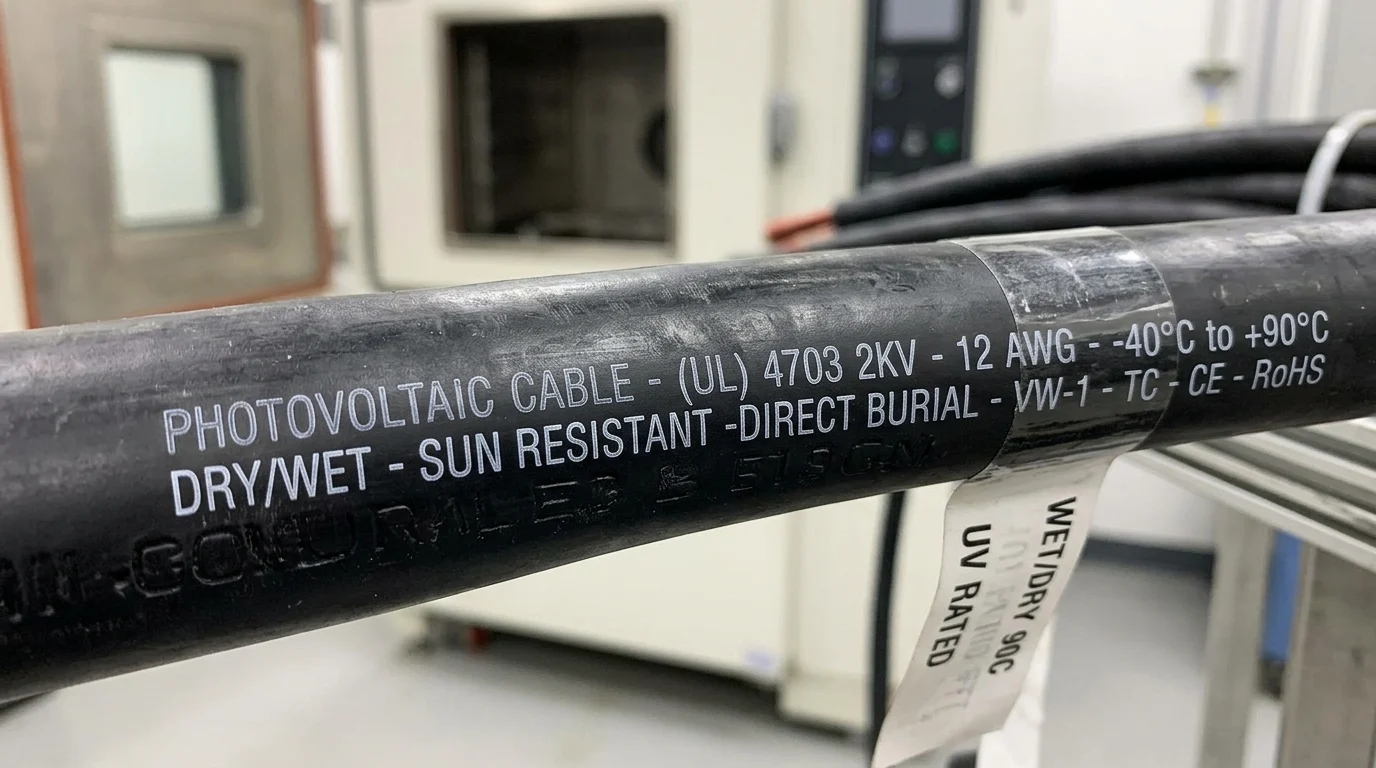
Beyond thermal constraints, solar arrays are continuously bombarded by ultraviolet radiation, moisture, and fluctuating atmospheric conditions. To ensure the electrical infrastructure survives the standard 25-year to 30-year operational lifespan of a modern solar farm, cables must possess robust weather ratings validated through rigorous testing protocols. Weather-related downtime can cost utility-scale operators thousands of dollars per day, making environmental resilience a primary specification metric.
How to compare UV, wet, and dry performance
Evaluating a cable's performance requires analyzing its behavior under simultaneous UV exposure and moisture ingress. Cross-linked polyethylene (XLPE) has become the industry standard due to its exceptional dielectric strength retention in wet environments, whereas traditional PVC degrades rapidly under similar conditions. Sunlight resistance is equally critical; without adequate carbon black or synthetic UV inhibitors formulated into the jacket, the outer layer will chalk, split, and fail.
| Insulation Material | Typical Max Temp Rating | UV Resistance | Wet Dielectric Strength | Estimated Field Lifespan |
|---|---|---|---|---|
| XLPE (Cross-linked PE) | 120°C | Excellent | High | 25+ Years |
| EPR (Ethylene Propylene) | 105°C | Good | High | 20-25 Years |
| PVC (Polyvinyl Chloride) | 90°C | Poor to Fair | Moderate | 10-15 Years |
Which standards best predict real-world durability
Regional and international testing standards provide the most reliable benchmarks for predicting environmental durability and mechanical toughness. In North America, the UL 4703 standard requires photovoltaic wires to pass a stringent 720-hour weatherometer test, utilizing xenon-arc lamps and moisture cycles to verify long-term sunlight resistance. Conversely, the European EN 50618 standard, often associated with TÜV certification, mandates an aggressive 20,000-hour thermal endurance test at a sustained 120°C to guarantee long-term chemical stability. Cables carrying dual UL and TÜV certifications generally offer the highest predictability for real-world durability. Procuring dual-certified cables ensures the jacket material will not fail under prolonged exposure to cyclic freezing, thawing, and intense solar irradiation, regardless of the deployment geography.
How to Select Photovoltaic Cables for Solar Projects
Procuring the correct cabling infrastructure requires balancing precise electrical specifications, environmental resilience, and mechanical compatibility. Engineering, Procurement, and Construction (EPC) firms must navigate a complex matrix of supply chain variables to prevent operational bottlenecks and minimize total lifecycle costs across utility-scale and commercial projects.
Specification and sourcing steps to reduce mismatch
The first step in procurement is ensuring precise mechanical and electrical alignment between the cable and the terminating system components. Standard utility-scale string wiring typically utilizes 12 AWG to 8 AWG tinned copper conductors, chosen specifically for superior corrosion resistance over bare copper. However, specifying the correct outer diameter (OD) is crucial for connector compatibility. A cable with an OD ranging from 5.5mm to 7.2mm must perfectly match the internal sealing gland of standard MC4 connectors. A dimensional mismatch of even 0.5mm can compromise the IP68 waterproof rating of the connection, leading to microscopic moisture ingress, localized galvanic corrosion, and eventual connection failure. Developers must establish strict specification sheets that lock in both conductor size and jacket thickness before authorizing bulk purchases.
How to balance compliance, durability, and installation needs
Selecting the optimal cable involves weighing upfront capital expenditures against long-term compliance and field installation efficiency. While higher-rated cables—such as those with 120°C thermal limits or dual UL/TÜV certifications—may carry a premium price, they significantly reduce the risk of premature insulation failure, costly downtime, and safety hazards. By prioritizing robust temperature and weather ratings alongside precise mechanical compatibility, project developers can ensure their solar arrays deliver reliable, uninterrupted power throughout their intended design life.
Key Takeaways
- The most important conclusions and rationale for photovoltaic cable temperature ratings
- Specs, compliance, and risk checks worth validating before you commit
- Practical next steps and caveats readers can apply immediately
Frequently Asked Questions
What temperature rating should a photovoltaic cable have?
Match it to site heat and load. For hot rooftops or desert arrays, 105°C or 120°C cable is usually safer than 90°C because derating cuts ampacity quickly at high ambient temperatures.
How does high ambient temperature affect PV cable ampacity?
It reduces safe current capacity. A 10 AWG 90°C PV cable carrying 40A at 30°C may drop to about 23.2A at 60°C after derating, so sizing must reflect real site temperatures.
What happens if a PV cable runs above its temperature rating?
Insulation ages much faster. Roughly every 10°C above its continuous rating can halve service life, increasing the risk of cracking, ground faults, arc faults, and fire.
Which insulation material is best for weather-resistant photovoltaic cable?
XLPE is often the best choice for outdoor PV systems because it offers strong UV resistance, high wet dielectric strength, and a typical field lifespan of 25+ years.
Why do weather ratings matter for photovoltaic cables?
They show whether the cable can withstand UV, moisture, and temperature swings for decades. Good weather-rated cable helps prevent jacket splitting, insulation failure, and costly downtime.