
 Send Email
 Whatsapp


Introduction
For critical solar installations, connector selection is not a routine sourcing task but a reliability and safety decision with long-term consequences. A qualified manufacturer must demonstrate consistent electrical performance, material durability, certification compliance, and proven compatibility under real operating conditions. This article explains how to verify those claims before procurement, from reviewing test data and production controls to checking traceability, standards alignment, and field performance history. By the end, readers will have a practical framework for identifying manufacturers that can support high-voltage PV systems without introducing avoidable fire risk, downtime, or costly replacement issues.
Why Solar Connector Manufacturer Verification Matters
Solar Connectors are critical linking components in photovoltaic (PV) arrays, responsible for safely transmitting high-voltage direct current (DC) from panels to inverters. Despite their small physical footprint, these components bear the immense stress of continuous electrical loads, extreme temperature fluctuations, and harsh environmental exposure over decades. Ensuring procurement teams partner withthoroughly vetted suppliers is paramount for the long-term viability, safety, and profitability of any utility-scale or commercial solar installation. Treating connectors as simple commodity items is a frequent oversight that can compromise an entire multi-megawatt array.
Key Risks of Poor Manufacturer Verification
The most significant danger in solar installations stems from substandard components or incompatible cross-mating between different connector brands. When procurement teams skip rigorous vetting, they risk introducing connectors that cannot safely handle modern 1500V DC system architectures. Poorly manufactured connectors often suffer from high contact resistance, leading to localized heating during peak generation hours. Over time, this thermal stress degrades the insulating housing, significantly increasing the probability of DC arc faults, melting, and catastrophic thermal runaway. Industry data frequently indicates that improperly specified or defective DC connectors are responsible for a vast majority of PV system fires, posing severe liability and safety risks to asset owners.
How Verification Protects Project Reliability
Implementing a strict vetting process directly shields the financial and operational health of a solar asset. By confirming a manufacturer adheres to precise engineering tolerances, developers ensure the connectors maintain their structural and electrical integrity over the standard 25-year lifespan of a solar project. This proactive approach minimizes unexpected downtime, reduces the Levelized Cost of Energy (LCOE), and prevents expensive field replacement campaigns that can cripple a project's return on investment. Furthermore, reliable verification provides confidence to investors and insurers, who increasingly require proof of stringent component quality control before underwriting large-scale renewable energy portfolios.
Technical, Compliance, and Factory Checks
Evaluating a supplier requires looking beyond basic product brochures to examine their fundamental engineering practices, regulatory compliance, and factory-level execution. A rigorous audit separates premium manufacturers from high-risk commodity assemblers, ensuring the components can withstand the physical and electrical demands of a modern solar farm.
Certifications, Materials, and Product Specifications
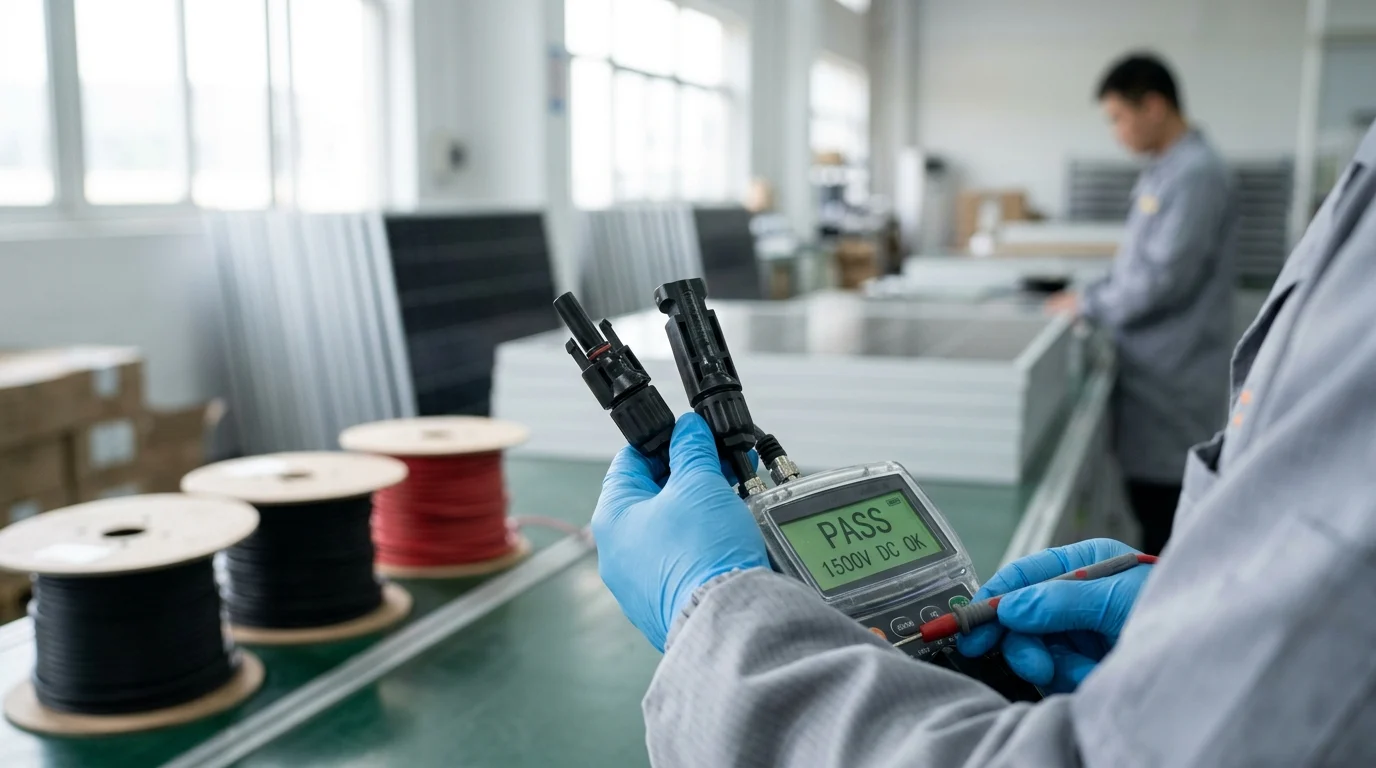
Top-tier manufacturers must provide verifiable documentation showing compliance with global standards, most notably UL 6703 and IEC 62852. These certifications confirm the products have passed stringent laboratory tests, including 1000-hour damp heat tests, cold impact tests at -40°C, and rigorous UV exposure trials. Material selection is equally critical; high-quality connectors utilize robust thermoplastics like Polyphenylene Oxide (PPO) or Polycarbonate (PC) for the housing, alongside heavily tinned copper contacts to prevent oxidation. Procurement engineers should look for technical specifications guaranteeing a contact resistance of less than 0.25 mΩ, ensuring minimal power loss and heat generation under peak loads. Furthermore, a verifiable IP68 rating is non-negotiable to protect against water ingress during heavy rainfall or localized flooding.
Quality Control, Traceability, and Manufacturing Capability
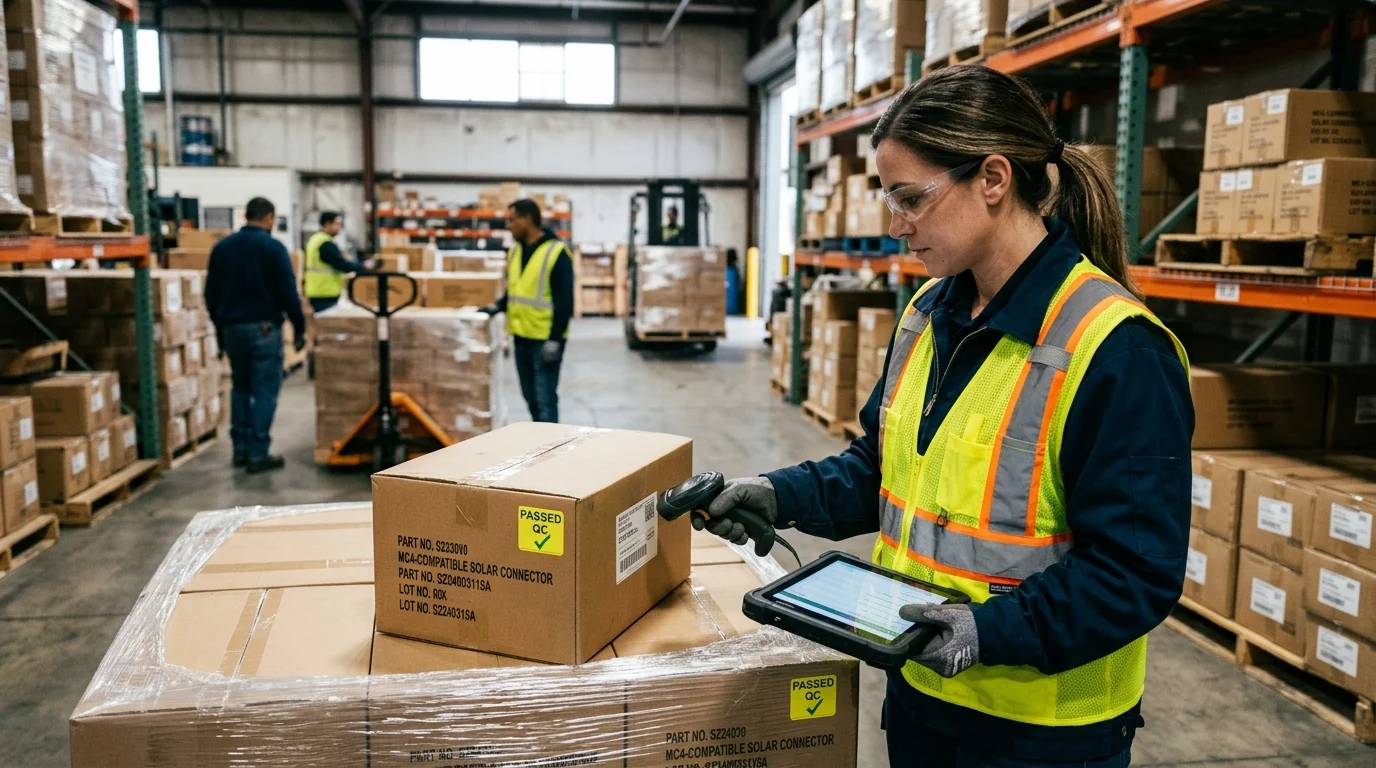
A supplier's manufacturing capability dictates their ability to produce consistent quality at scale. Buyers must evaluate the factory's ISO 9001 quality management systems and the degree of automation on the assembly line. Automated stamping and insertion processes drastically reduce human error compared to manual assembly, ensuring uniform crimping and seating of internal pins. Furthermore, robust traceability—such as laser-etched batch codes on every individual connector—allows for rapid isolation of anomalies if a field failure occurs. Leading factories maintain strict statistical process control, utilizing in-house thermal chambers and X-ray inspection to target defect rates below 50 Parts Per Million (PPM).
| Evaluation Metric | Substandard Manufacturer | Premium Manufacturer |
|---|---|---|
| Contact Resistance | > 0.50 mΩ | < 0.25 mΩ |
| Defect Rate Target | > 500 PPM | < 50 PPM |
| Housing Material | Generic ABS / Low-grade PA | High-grade PPO / PC |
| Assembly Method | Highly Manual | Fully Automated / Robotic |
| Certification Status | Self-declared or Expired | Active UL 6703 / IEC 62852 |
How Buyers Should Complete Verification
Structuring a formal procurement strategy ensures all technical and commercial requirements are met before a single purchase order is issued. This systematic approach eliminates guesswork, standardizes the evaluation criteria across multiple vendors, and establishes a foundation for a secure, long-term supply chain.
Step-by-Step Verification Process and Document Checklist
The verification journey should begin with a Mutual Non-Disclosure Agreement (MNDA) to facilitate the transparent sharing of proprietary test reports and factory data. Next, buyers must request a comprehensive document package, including third-party laboratory certificates valid within the last 12 to 24 months, raw material origin certificates, and internal quality control logs. Following document review, teams should conduct a factory audit—either physically or via a live virtual tour—to inspect the tooling, storage conditions, and testing equipment. Finally, buyers must request production samples to conduct their own independent mechanical and electrical stress tests before mass production begins. For comprehensive guidance on structuring this phase, consulting resources on reliable solar connector manufacturer verification can streamline the due diligence process and highlight industry best practices.
How to Evaluate Cost, Lead Time, and Warranty Support
Beyond technical specifications, commercial viability relies on favorable logistics and post-sale support. Buyers should analyze the manufacturer's Minimum Order Quantity (MOQ) thresholds—which typically range from 10,000 to 50,000 units for direct factory pricing—to ensure alignment with project phases. Lead times are another critical indicator of supply chain health and factory capacity; a robust manufacturer should maintain a standard lead time of 2 to 4 weeks, whereas inconsistent suppliers may stretch to 8 to 12 weeks, threatening project schedules. Finally, the warranty must be heavily scrutinized. A confident manufacturer will back their connectors with a minimum 10- to 15-year product warranty, explicitly detailing the terms of replacement, failure analysis protocols, and whether labor costs are covered in the event of a systemic batch failure.
Key Takeaways
- The most important conclusions and rationale for eliable solar connector manufacturer verification
- Specs, compliance, and risk checks worth validating before you commit
- Practical next steps and caveats readers can apply immediately
Frequently Asked Questions
What certifications should a reliable solar connector manufacturer provide?
Ask for active UL 6703 and IEC 62852 certificates, not self-declarations. Verify certificate numbers, scope, and model names match the exact connector you plan to buy.
How can I confirm the connector is suitable for 1500V DC solar systems?
Check the datasheet and test reports for a 1500V DC rating, IP68 protection, and contact resistance below 0.25 mΩ. Request third-party lab documentation for the exact model.
Why is cross-mating between different connector brands risky?
Different brands may look similar but have different tolerances and locking designs. Using unmatched pairs can increase resistance, overheating, and arc-fault risk, so use approved same-brand mating components.
What factory checks help verify manufacturer reliability?
Review ISO 9001 status, production automation, in-house testing, and batch traceability. Prefer factories with laser-etched codes, thermal testing capability, and defect-rate targets below 50 PPM.
What should procurement teams request before placing a solar connector order?
Request certifications, datasheets, material details, sample test results, warranty terms, and traceability records. A factory audit or sample validation run is practical before approving large-volume purchases.