
 Send Email
 Whatsapp


PNTECH's Exploration of JinkoSolar Factory Event

Against the backdrop of the global energy transition accelerating, photovoltaic and energy storage technologies are becoming the core engines driving green development. On July 4th, Pinntek was invited to explore the Jihong Super Factory of Jinko Solar in Haining, getting a close look at the industry-leading intelligent manufacturing system and technological innovation achievements.
Key Takeaways
- JinkoSolar uses smart robots and advanced technology to make high-quality, efficient solar panels that last longer and work better in all weather.
- The company builds solar panels in eco-friendly factories that save energy, recycle materials, and reduce pollution to protect the planet.
- Working together with other solar leaders helps PNTECH and JinkoSolar create smarter products and speed up the clean energy future for everyone.
Solar Energy Innovation at JinkoSolar
Intelligent Manufacturing Systems
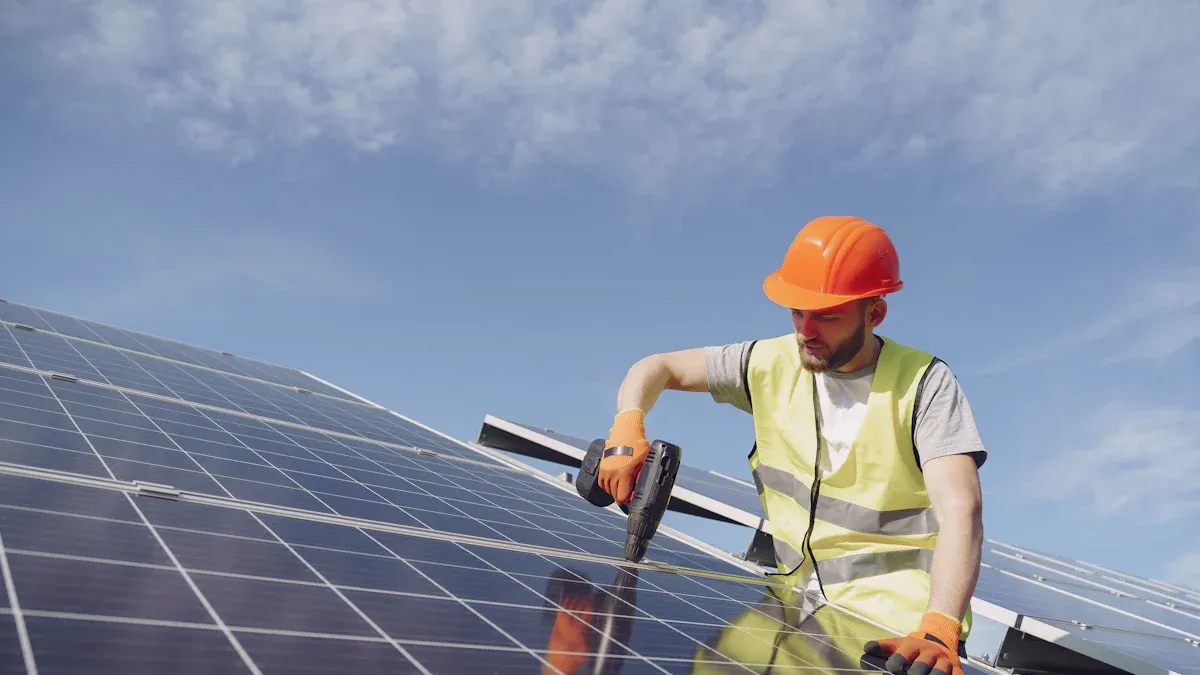
I walked into the heart of JinkoSolar’s factory and felt like I had entered a sci-fi movie. Robots zipped along the floor, carrying shiny solar panels with laser precision. JinkoSolar uses smart diagnostics, IoT gadgets, and robotic workstations everywhere. These machines collect data, track every panel, and make sure nothing slips through the cracks. I watched as the production line moved like a well-choreographed dance. Each robot knew its part, and the whole system worked faster than I could blink.
JinkoSolar’s team told me they use Industry 4.0 principles. That means they mix artificial intelligence, automation, and data analytics to boost efficiency. The factory can quickly respond to urgent orders and keep quality high. I learned that their modules rarely fail, and the mismatch rate is super low. This helps solar energy systems run smoothly for years. The Tiger Pro system, for example, keeps costs down and power up. I left the area thinking, “Wow, this is the future of solar energy!”
Sustainable Production Practices
Next, I explored how JinkoSolar keeps things green. The company builds solar panels in zero-carbon factories. They use recycled materials and energy-saving methods to shrink their environmental footprint. I spotted a big sign showing off their awards—like a ‘B’ grade from CDP and a spot on the Forbes 2024 China ESG 50 list. That’s not just bragging; it means they really care about the planet.
JinkoSolar also shares Environmental Product Declarations, so customers know exactly how green their panels are. I found out they passed the Science Based Targets initiative reviews, which is a big deal in the world of sustainability. Every step, from using less energy to recycling, helps fight climate change. I left the factory inspired, knowing that solar energy can power the world and protect it at the same time.
PNTECH's Journey Through the Factory
Arrival and Initial Impressions
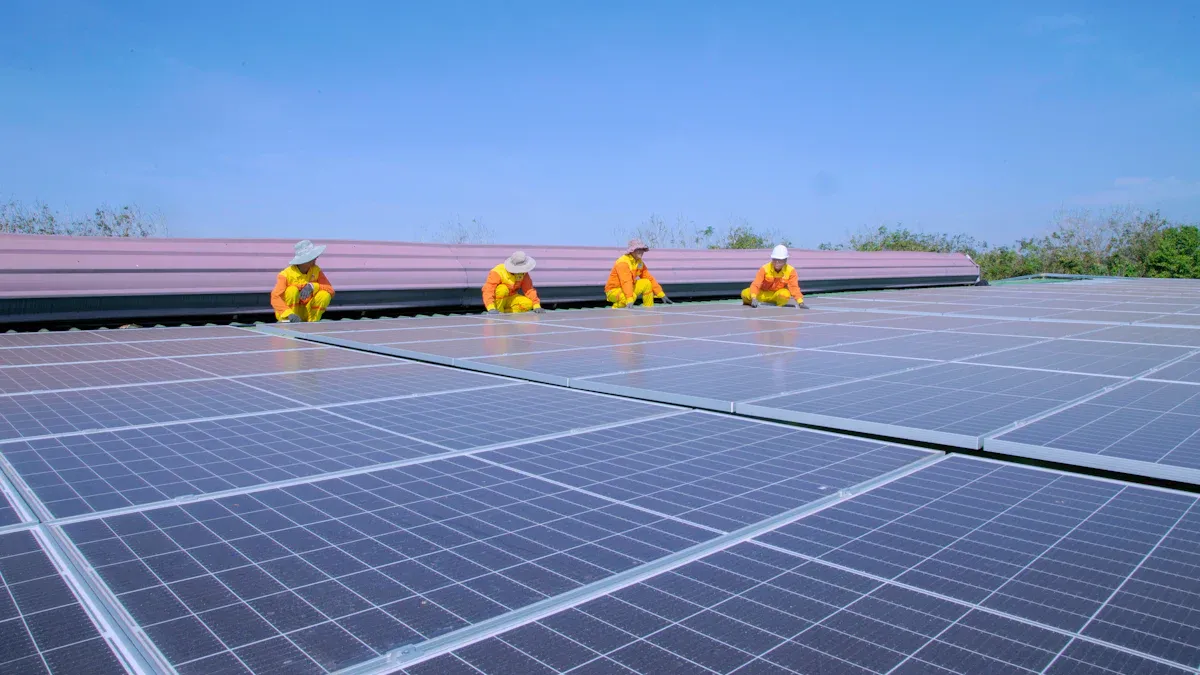
I rolled up to the JinkoSolar factory, and my jaw nearly hit the floor. The building looked like a spaceship landed in the middle of an industrial park. Glass walls sparkled in the sun. Security guards waved me in with big smiles. I felt like a VIP on a secret mission. The air buzzed with excitement. I could almost hear the solar panels humming from inside. My sneakers squeaked on the shiny floor as I stepped through the entrance. I spotted a giant digital screen flashing the words, “Welcome, PNTECH!” I grinned. This was going to be epic.
Guided Tour of Key Manufacturing Areas
A friendly guide handed me a badge and led me straight into the action. We zipped past rows of machines that looked like they belonged in a sci-fi movie. Robots zipped by, carrying stacks of solar cells. I watched as workers in crisp uniforms checked each panel with laser scanners. My guide pointed out the polysilicon supply area. JinkoSolar invested $70 million in a joint venture to keep their supply steady, even when the market gets wild. They also work with different suppliers to avoid shortages. I nodded, impressed. These folks think ahead.
Engaging with JinkoSolar Experts
I sat down with a group of JinkoSolar experts. They shared some cool facts:
- JinkoSolar is expanding into energy storage, not just solar panels.
- They recently deployed a 21.6 MWh system in Massachusetts.
- Their U.S. engineers help local projects and keep supply chains strong.
- The company’s profits are expected to jump by 50% next year as the market improves.
- They believe new technology and local service will speed up the clean energy revolution.
“We’re not just making panels,” one expert said. “We’re building the future of energy.”
I left the meeting feeling inspired and ready to dream bigger.
Key Discoveries in Solar Energy Technology
Advanced Solar Panel Manufacturing Processes
I wandered into the manufacturing zone and felt like I had entered a solar-powered candy factory. Machines whirred, robots zipped, and everywhere I looked, shiny panels sparkled under bright lights. JinkoSolar’s process isn’t just high-tech—it’s next-level. They use N-Type cells, which last longer and work better than the usual P-type cells. I watched as tiling ribbon technology reduced the gaps between cells, making the panels look like a perfect mosaic. This trick boosts performance, especially on cloudy days.
My guide showed me a table comparing JinkoSolar’s features to what I’d seen at other factories:
| Feature | Description |
|---|---|
| N-Type Cells | High-grade cells with better efficiency, longer lifespan, and lower degradation than P-type cells. |
| Tiling Ribbon Technology | Reduces cell gaps, increases active surface area, and improves low-light performance by 5%. |
| 9 Busbars (9BB) | Enhances electrical conductivity and panel reliability. |
| Power Output | Tiger Pro panels reach up to 610W, among the highest in the industry. |
| Efficiency | Module efficiencies up to 23.53%, with Tiger Pro panels around 21.6%. |
| Temperature Coefficient | Low coefficient (-0.35%/°C) maintains performance in hot climates. |
| Automation and Quality Control | Highly automated production with 52 quality tests per module, including 100% electroluminescence testing. |
| Sustainability Initiatives | Commitment to 100% renewable energy use by 2025, reduced lead-based solder, and use of recycled materials. |
I couldn’t help but marvel at the automation. Robots handled almost every step, from slicing silicon wafers to welding the tiniest ribbons. JinkoSolar even makes their own ingots and wafers, using the latest slicing methods. That’s rare in the industry! They test each wafer with fancy tools like ICP-MS and photoluminescence. It’s like a science fair, but with lasers and robots.
JinkoSolar’s modules have set records, reaching up to 23.53% efficiency. Their secret? They use TOPCon cell technology and clever welding that cuts down on resistance. The panels look sleek and work even better. I realized that JinkoSolar’s obsession with research and development pushes solar energy forward for everyone.
Quality Control and Efficiency Measures
I peeked behind the scenes and saw a quality control process that would make any perfectionist proud. JinkoSolar puts every panel through 52 different tests. That’s right—fifty-two! They use electroluminescence testing before and after lamination to catch even the tiniest cracks. If a panel sneezes, they know about it.
Dr. Jin Hao, the CTO, told me they invest heavily in research and development. They want every panel to last decades, not just years. JinkoSolar’s panels have earned top marks from independent testers like PVEL for five years straight. I saw workers checking materials from suppliers, making sure everything met strict standards. They even have their own UL-certified test labs.
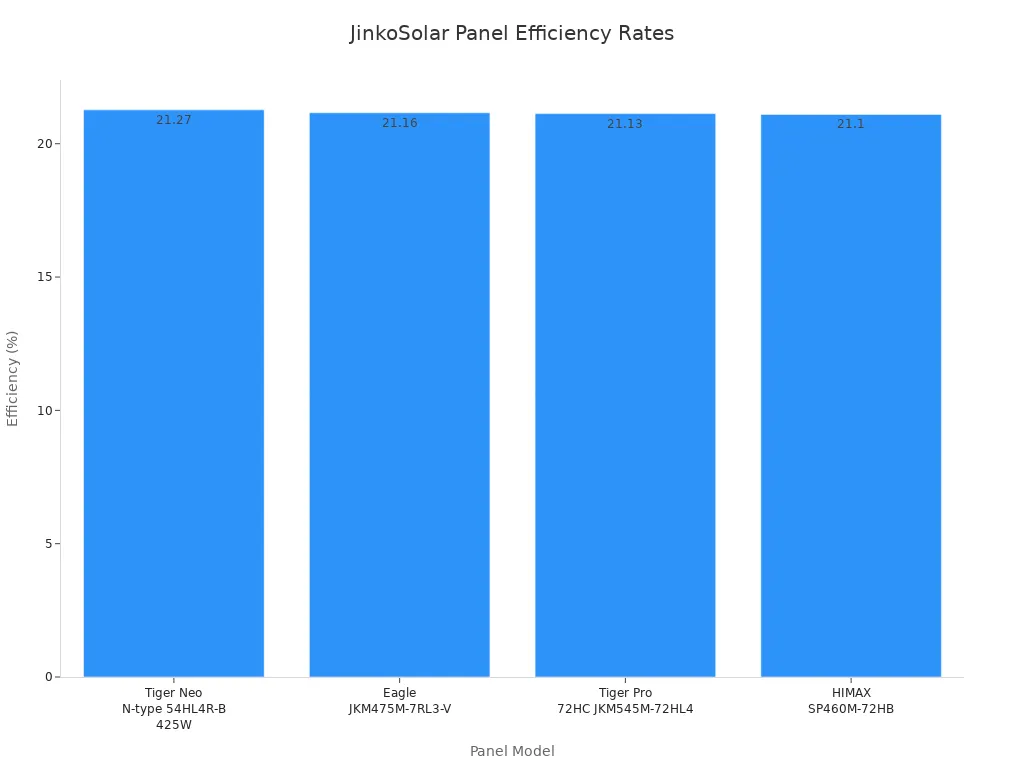
Here’s a quick look at how their panels stack up:
| Panel Model | Efficiency (%) |
|---|---|
| Tiger Neo N-type 54HL4R-B 425W | 21.27 |
| Eagle JKM475M-7RL3-V | 21.16 |
| Tiger Pro 72HC JKM545M-72HL4 | 21.13 |
| HIMAX SP460M-72HB | 21.1 |
I spotted a chart comparing efficiency rates of four JinkoSolar panel models. The bars soared high, showing just how much power these panels can squeeze from the sun.
JinkoSolar uses SMBB (small, round busbars) and half-cut cell technology to trap more light and reduce heat loss. Their panels can handle snow loads up to 5.4 meters and wind speeds up to 225 km/h. That’s stronger than my neighbor’s trampoline during a storm! The temperature coefficient stays low, so the panels keep working even when it’s hot outside. I realized that with these quality checks and smart designs, solar energy becomes more reliable and efficient for everyone.
Technological Breakthroughs in Solar Modules
The real magic happened when I learned about JinkoSolar’s latest breakthroughs. They rolled out the world’s first UL-listed 2,000-volt EAGLE Modules. Most panels top out at 1,500 volts, but these can handle more power and longer string lengths. That means fewer cables, lower costs, and less energy lost along the way. Utility-scale solar projects just got a major upgrade.
JinkoSolar also showed off their work with bifacial modules. These panels soak up sunlight from both sides, boosting energy yield by up to 30%. I imagined a field of panels, catching rays from above and reflected light from below. That’s like getting a bonus every sunny day! They use HJT and TOPCon technologies to push efficiency above 24%. AI-powered systems help position panels for maximum sunlight and predict when maintenance is needed. Some panels even use dual-axis tracking, following the sun like a sunflower and capturing up to 45% more energy.
“We’re not just making solar panels,” one engineer told me. “We’re building smarter, stronger, and more affordable solar energy for everyone.”
JinkoSolar’s technical team also highlighted new solar solutions for agriculture, like solar-powered pumps for irrigation. Farmers can now water their crops using clean energy, even in remote areas. These innovations make solar energy more accessible and cost-effective, speeding up the global shift to renewables.
Of course, challenges remain. JinkoSolar faces tough global trade rules, shifting regulations, and supply chain hurdles. They use digital tools to track every step, making sure they meet strict ESG standards and keep their carbon footprint low. I left the factory convinced that with these breakthroughs, solar energy will keep getting better, cheaper, and more reliable.
Reflections and Strategic Takeaways
Lessons Learned from the Event
I walked out of the JinkoSolar factory with my brain buzzing. The biggest lesson? Balance matters. JinkoSolar showed me how they mix standard products with custom solutions. This keeps costs low but still meets different customer needs. I saw how their Neo Green series comes from carbon-neutral factories. That’s not just a label—TÜV Rheinland certified it as a ‘Zero Carbon Factory.’ I learned that being open about ESG, traceability, and carbon footprints is now the gold standard. JinkoSolar uses solar, hydro, and wind power in their factories. They recycle more, use less plastic, and even ship panels on LNG-powered boats. Their n-type TOPCon technology makes panels greener and more powerful. I realized that adapting to tough markets, like Europe, means you need smart products and the right certifications.
Opportunities for Industry Collaboration
The event felt like a team huddle for the whole solar industry. I saw real teamwork in action:
- PNTECH co-hosted the 2024 Photovoltaic Integration Summit with SUNGROW, Jinko Solar, and Zhongxin Smart Technology Co., Ltd.
- We shared new ideas—like rodent-proof cables, N-type TOPCon tech, and low-carbon solutions.
- Experts and company leaders joined a high-level forum to talk about innovation and why working together matters.
- The summit became a launchpad for new partnerships and a stronger solar market.
“Collaboration is the secret sauce for a brighter, cleaner future,” I thought as I watched everyone shake hands.
Influence on PNTECH’s Vision for Solar Energy
This adventure changed how I see PNTECH’s future. I want us to focus on sustainability, just like JinkoSolar. We need to keep pushing for smarter, greener products. I believe working with other leaders will help us grow faster and make solar energy more reliable for everyone. My goal? Make PNTECH a champion for clean energy and teamwork.
I left the JinkoSolar factory with my head spinning from all the Solar energy magic. Partnerships spark wild inventions—like AI robots, smart trackers, and hail-busting gadgets.
- Companies team up to:
- Upgrade old solar systems
- Boost energy yields with AI
- Build stronger, smarter panels
Here’s what PNTECH can achieve next:
| Outcome | Details |
|---|---|
| Sales Revenue | 350 million yuan in 2023 |
| Market Reach | Products in 108 countries |
| Certifications | ISO9001, TUV, IEC, CE, and more |
| Solar Capacity | 33.92 MW installed for poverty relief |
| Social Impact | Projects that power a greener, brighter future |
I can’t wait to see how PNTECH lights up the world with Solar energy and teamwork!
FAQ
What surprised me most at the JinkoSolar factory?
The robots! I watched them zip around like race cars. They never got tired. I wanted to high-five one, but it ignored me. 🤖
How does JinkoSolar keep their panels so green?
I saw them recycle everything—even water! They use solar power to make solar panels. That’s like a superhero using superpowers to save the world.
Can anyone visit the JinkoSolar factory?
Nope, not everyone. I got lucky! You need an invitation or a special event. If you get a chance, grab it. The place feels like a solar wonderland.