

 Send Email
 Whatsapp


News
The Importance of TUV Certification for Solar Connectors in Global Markets
2026-06-18
In global solar projects, connector quality is not a minor detail: it directly affects safety, system uptime, insurance acceptance, and market access. TUV-certified Solar Connectors give manufacturers, EPCs, and buyers independent proof that these components meet recognized standards for electrical performance, durability, and environmental resistance under demanding PV conditions. This article explains why TUV certification matters in international markets, what risks uncertified connectors can introduce, and how certification supports compliance, investor confidence, and long-term reliability across utility, commercial, and residential installations.
Why TUV-Certified Solar Connectors Matter
As global solar photovoltaic (PV) installations scale to meet ambitious renewable energy targets, the structural and electrical integrity of every system component becomes increasingly critical. Solar connectors serve as the vital arteriesof power transmission, seamlessly linking individual panels, string combiners, and central inverters. Operating continuously in harsh outdoor environments—from arid deserts to humid coastal regions—these components face extreme thermal and electrical stress. Modern utility-scale PV systems routinely operate at elevated voltages up to 1500V DC, making any component failure a severe safety and fire hazard rather than just an operational disruption.
To mitigate these risks, the global solar industry relies on independent testing and certification bodies to validate component safety. Technischer Überwachungsverein (TUV) certification stands as the preeminent global gold standard for PV components. Securing genuine TUV certified solar connectors ensures the interconnection hardware has passed rigorous, standardized testing protocols. This provides project developers, financial backers, and EPC (Engineering, Procurement, and Construction) contractors with verifiable, third-party proof of the hardware's durability, safety, and long-term performance.
Safety, reliability, and compliance benefits
The primary benefits of utilizing certified interconnection hardware revolve around fire prevention, electrical stability, and stringent regulatory compliance. High-quality, certified connectors are engineered to maintain an ultra-low contact resistance of less than 0.5 milliohms throughout a standard 25-year solar project lifecycle. This exceptionally low resistance is crucial because elevated contact resistance generates excessive heat under high current loads—the leading cause of catastrophic DC arc faults and subsequent solar array fires. Furthermore, grid operators, municipalities, and insurance underwriters increasingly mandate strict TUV compliance as a non-negotiable prerequisite for project approval and liability coverage, rendering uncertified components a significant financial liability.
Certification scope buyers should verify
Procurement teams and design engineers must look beyond the basic TUV logo and meticulously verify the specific scope of the certification. Connectors must be certified to stringent industry standards such as IEC 62852 or EN 50521, which dictate the essential performance requirements for heavy-duty DC applications in PV systems. Buyers should confirm that the certification covers critical environmental tolerances, including long-term UV resistance, IP67 or IP68 ingress protection against water and fine dust, and thermal endurance across a demanding temperature spectrum of -40°C to +85°C. Verifying these parameters ensures the hardware matches the specific environmental demands of the installation site.
TUV-Certified vs Non-Certified Solar Connectors
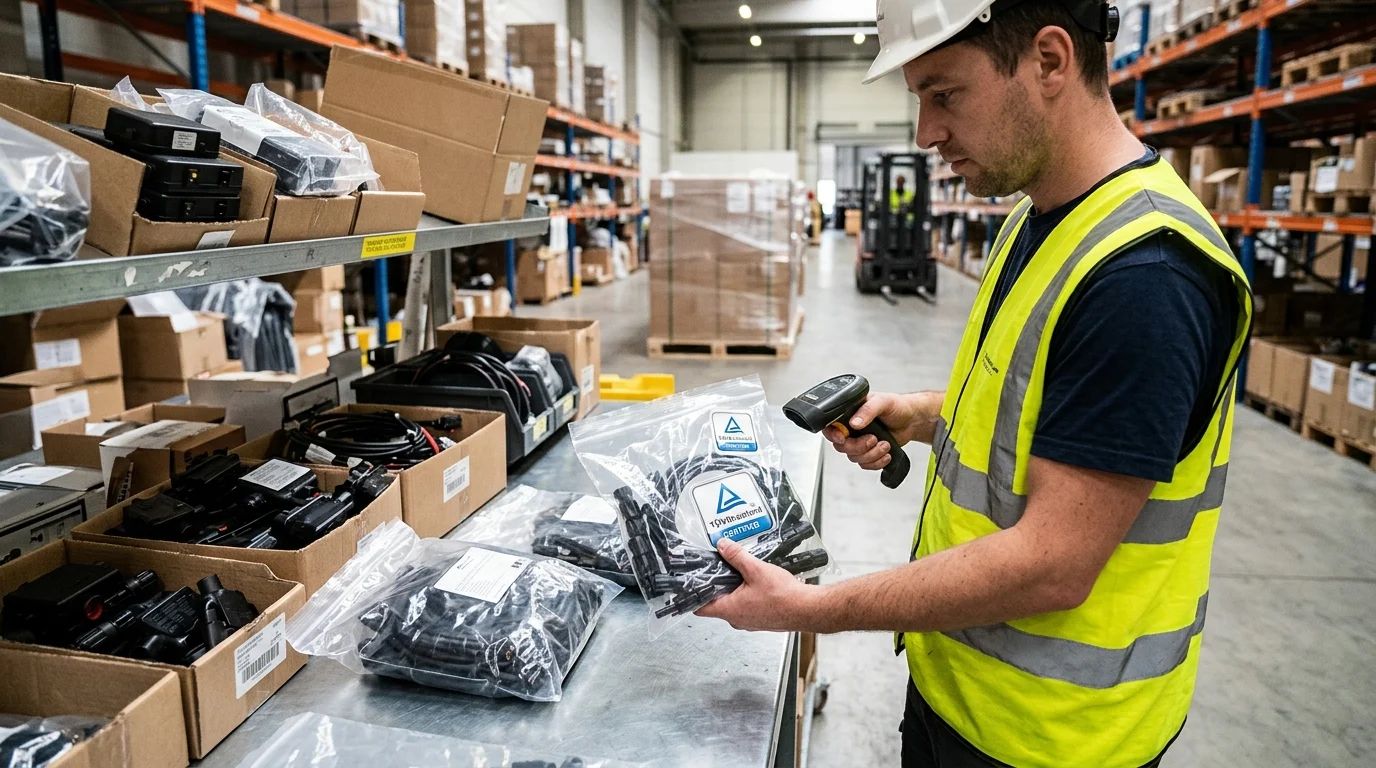
The global market for PV components is flooded with low-cost, substandard alternatives that closely mimic the form factor of industry-standard connectors but lack the underlying engineering, precision, and material quality. While substituting non-certified connectors might yield marginal upfront cost savings during procurement, the long-term financial and operational consequences are overwhelmingly negative. Increased Operations and Maintenance (O&M) costs, system downtime, and hardware replacement easily eclipse initial savings. Understanding the technical divide between certified and uncertified options is essential for effective risk management and asset protection.
Key differences in testing and durability
The most significant divergence between these products lies in the severity and comprehensiveness of their testing regimens. TUV approval requires components to survive highly accelerated life testing (HALT) to simulate decades of environmental abuse. This includes 1000-hour damp heat tests at 85°C and 85% relative humidity, rigorous salt mist corrosion testing for coastal applications, and minimum 200-cycle thermal shock tests from -40°C to +85°C. Mechanically, certified connectors must withstand a minimum cable retention pull-force of 89 Newtons without exhibiting electrical or mechanical degradation. In stark contrast, non-certified alternatives typically utilize inferior recycled plastics and lower-grade copper alloys that degrade rapidly under constant UV exposure, often failing mechanical retention tests or losing their waterproof seals within the first 24 to 36 months of field deployment.
Technical and regulatory evaluation criteria
Evaluating components objectively requires a side-by-side analysis of technical thresholds and material specifications. Certified components guarantee baseline performance metrics that uncertified components consistently fail to meet, particularly under maximum load conditions. The table below outlines the standard evaluation criteria separating approved, high-performance hardware from substandard alternatives:
| Evaluation Criteria | TUV Certified Connectors | Non-Certified Equivalents |
|---|---|---|
| Contact Resistance | Consistently < 0.5 mΩ | Frequently > 2.0 mΩ (unstable) |
| Ingress Protection | IP67 / IP68 verified | IP65 or lower (prone to seal failure) |
| Material Flammability | UL94 V-0 (self-extinguishing) | Variable / Unrated |
| Max System Voltage | 1000V / 1500V DC | Often untested above 600V DC |
| Mating Cycles | Guaranteed for 50+ cycles | High wear and deformation after 5-10 cycles |
How to Source and Verify TUV-Certified Solar Connectors
Identifying a reliable supplier of PV components requires strict vendor qualification protocols and thorough due diligence. Because counterfeit certifications, altered test reports, and unauthorized logo usage remain persistent challenges in the global solar supply chain, buyers must implement robust verification steps before issuing purchase orders. A systematic, heavily documented approach to sourcing protects overall project integrity, ensures regulatory compliance, and guarantees long-term operational continuity for the life of the solar asset.
Steps to confirm traceability and factory credentials
The first step in comprehensive verification is establishing absolute supply chain traceability.
Key Takeaways
- The most important conclusions and rationale for TUV certified solar connectors
- Specs, compliance, and risk checks worth validating before you commit
- Practical next steps and caveats readers can apply immediately
Frequently Asked Questions
What does TUV certification prove for solar connectors?
It shows the connector passed independent safety, durability, and performance testing for PV use, helping reduce fire, arc-fault, and premature failure risks.
Which standards should buyers check on TUV certified solar connectors?
Verify the certification scope includes IEC 62852 or EN 50521, plus the rated voltage, current, and intended PV application.
Why are TUV certified solar connectors important in global markets?
Many EPCs, insurers, utilities, and regulators require recognized third-party certification, so TUV-certified connectors simplify project approval and cross-border procurement.
What site conditions should the certification cover?
Check for UV resistance, IP67 or IP68 sealing, and temperature endurance from -40°C to +85°C, especially for desert, coastal, or humid installations.
How do non-certified connectors increase long-term project costs?
They can develop higher contact resistance, seal failure, and mechanical weakness, leading to downtime, replacements, O&M costs, and possible compliance issues.