
 Send Email
 Whatsapp


What’s Driving Solar Cable Manufacturer Progress in 2025

I see rapid progress from every solar cable manufacturer in 2025. Strong demand for advanced materials, digital monitoring, and green solutions shapes the industry. I watch global market growth reach new highs, with a projected 8.1% CAGR through 2034. The table below shows key market figures:
| Metric/Segment | Value/Projection | Supporting Details |
|---|---|---|
| Global Market Value (2024) | USD 2.3 billion | Baseline market size before 2025 growth period |
| CAGR (2025-2034) | 8.1% | Driven by expansion of solar projects, investments, government incentives, and net zero targets |
| Industrial Segment CAGR | Over 8% (through 2034) | Adoption for sustainability goals and operational cost reduction |
| THHN Wire Segment Value (2034) | Over USD 1.9 billion | Due to durability, heat resistance, and cost-effectiveness |
| U.S. Market Value (2034) | Over USD 304 million | Supported by government policies, tax incentives, and renewable energy targets |
| Regional Growth Leaders | Asia Pacific (China, India), North America, Europe | Driven by national renewable goals, subsidies, and industrialization |
| Market Drivers | Investments, government incentives, net zero targets, advanced cable designs, IoT integration | Enhances adoption and market expansion |
I believe these drivers lead to safer, more reliable Solar Cable solutions. I use this knowledge to help clients choose the right solar cable manufacturer for their projects.
Key Takeaways
- Solar cable manufacturers grow rapidly by using advanced materials and smart technology to make cables safer, longer-lasting, and easier to monitor.
- Digital monitoring and IoT sensors help detect problems early, reduce downtime, and improve solar system efficiency and maintenance.
- Eco-friendly cables with recycled materials and strong certifications support sustainability goals and meet strict safety and quality standards worldwide.
Technological Innovations by Solar Cable Manufacturer
Advanced Materials and Enhanced Durability
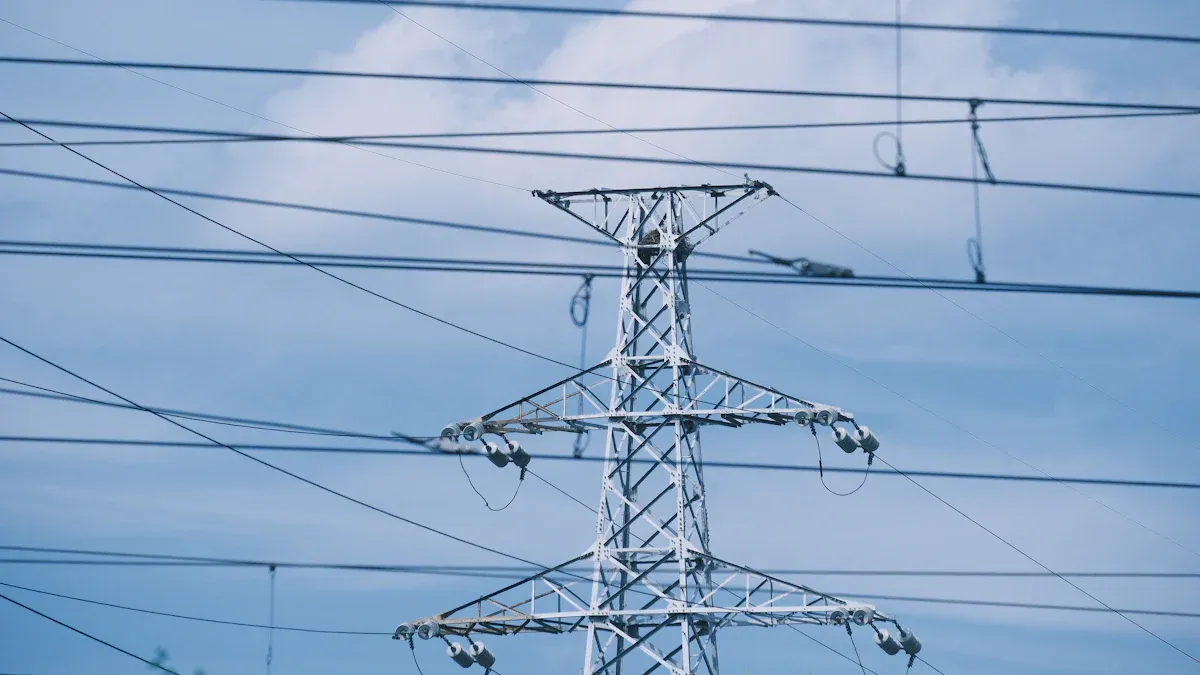
I see that every solar cable manufacturer now invests in advanced materials to boost cable performance and lifespan. I notice the use of aluminum and copper for better conductivity and durability. Manufacturers also use cross-linked polyethylene and halogen-free compounds. These materials make cables more flexible and resistant to heat, UV rays, and moisture. I often recommend cables with these features because they last longer and work well in harsh climates.
Note: High-temperature resistance and flame-retardant, low-smoke materials help prevent fires and protect the environment. These improvements keep solar systems safe and reliable for over 25 years.
I find that new coatings protect cables from sunlight and water. Stranded cable designs add flexibility and reduce breakage. Custom insulation materials ensure cables perform well in different weather. I see that eco-friendly designs use recycled materials and fewer harmful chemicals, supporting sustainability goals.
| Material/Feature | Benefit |
|---|---|
| Cross-linked polyethylene | Flexibility, heat resistance |
| Halogen-free compounds | Safety, low smoke, eco-friendly |
| Advanced coatings | UV and moisture protection |
| Stranded cable design | Flexibility, less breakage |
| Fire-resistant jackets | Improved safety |
Smart Cable Integration and Digital Monitoring
I watch the solar cable manufacturer landscape change with smart cable technology. Leading companies now build IoT-enabled sensors into cables. These sensors collect real-time data on current, voltage, daylight, temperature, and efficiency. The data travels to a cloud platform, where I can view it on easy-to-read dashboards. This system lets me monitor solar panel performance from anywhere.
- I use digital monitoring to spot faults quickly and fix them before they cause bigger problems.
- Early alerts help me avoid downtime and expensive repairs.
- I track energy use and savings, which helps me show clients their return on investment.
- The system also tracks CO2 emissions avoided, proving the environmental benefits of solar energy.
- Notification alerts remind me when to schedule maintenance, keeping systems running at peak efficiency.
I also see digital twins and SCADA systems in action. These tools let me monitor each part of a solar system closely. AI and machine learning help me find problems early and predict when maintenance is needed. Real-time monitoring and automated alerts make my job easier and extend the life of solar assets.
Tip: Smart cable integration supports compliance with global standards and makes it easier to manage large solar projects remotely.
Design Improvements for Efficiency and Cost-Effectiveness
I notice that every solar cable manufacturer now focuses on making cables more efficient and affordable. High-quality polymers and low-smoke, halogen-free compounds make cables tougher and safer. New insulation materials with better thermal stability and UV resistance cut down on energy loss and extend cable life.
- Lightweight and Flexible Cables make installation faster and cheaper.
- Smart technology, like built-in sensors, allows for real-time monitoring and quick fault detection.
- Using low-carbon and recycled materials helps meet strict environmental rules.
I see that engineers use advanced computer models to design cable layouts. They space cables to improve airflow and reduce heat buildup. This means cables can carry more current safely and last longer. I find that these changes lower material costs and reduce the risk of early cable failure.
| Design Feature | Impact on Projects |
|---|---|
| Lightweight, flexible cables | Easier, faster installation |
| Optimized cable geometry | Better heat dissipation, longer life |
| Smart sensors | Faster maintenance, less downtime |
| Eco-friendly materials | Lower carbon footprint, compliance |
I believe these innovations have boosted energy efficiency by up to 15%. They also cut maintenance costs and support the shift to sustainable solar energy.
Market Trends and Regulatory Shifts for Solar Cable Manufacturer
Sector-Specific Demands and Regional Growth
I see the solar cable market changing quickly in 2025. Each region grows at a different speed, and every sector has its own needs. In Asia-Pacific, I notice the fastest growth. Countries like China, Japan, India, and South Korea lead the way. Their governments support solar projects and push for smart cities and Industry 4.0. I work with clients in automotive, healthcare, telecom, and electronics. These sectors want reliable, high-performance cables for digital transformation and energy efficiency.
North America has the largest market size. The United States and Canada invest in advanced technology and adopt new innovations early. I help clients in automotive, healthcare, and telecom who need cables that meet strict standards. Europe grows steadily, with Germany, France, and the UK focusing on sustainability and smart manufacturing. I see strong demand from automotive, engineering, chemicals, and renewables.
Emerging regions like Latin America, the Middle East, and Africa show gradual growth. Infrastructure investments and economic development drive demand. I guide clients in these markets to choose the right solar cable manufacturer for their needs.
| Region | Growth Speed | Key Countries/Markets | Sector-Specific Drivers and Factors |
|---|---|---|---|
| Asia-Pacific | Fastest-growing region | China, Japan, India, South Korea | Industrial expansion, digital transformation, strong government support; sectors: automotive, healthcare, telecom, electronics, industrial manufacturing; government policies on sustainability, energy efficiency, smart urban development, Industry 4.0 |
| North America | Largest market size | United States, Canada | Advanced technological infrastructure, early innovation adoption; strong demand from automotive, healthcare, telecom sectors |
| Europe | Steady growth | Germany, France, UK | Regulatory frameworks for sustainability, innovation in smart manufacturing; focus on automotive, engineering, chemicals, renewables sectors; Industry 4.0 initiatives |
| Latin America, Middle East, Africa | Emerging, gradual growth | Various emerging markets | Infrastructure investments, economic development, increasing awareness and adoption of solar cable technologies |
Note: Asia-Pacific leads in both speed and scale, while North America and Europe set high standards for quality and innovation.
Compliance, Safety, and Quality Standards
I pay close attention to compliance and safety standards. These rules shape how I select and recommend cables. In 2025, I see several key international standards that every solar cable manufacturer must follow:
- UL (Underwriters Laboratories)
- CE Marking
- IEC Standards
- CSA (Canadian Standards Association)
- RoHS Compliance
- VDE Certification
These standards cover fire resistance, voltage handling, environmental resistance, and mechanical durability. I always check for multiple certifications, like UL, CE, and IEC, to ensure cables work safely in different countries. Cables must also handle extreme temperatures, UV rays, and moisture. I look for cables rated from -40°C to +90°C or higher for outdoor use.
Tip: Choosing cables with strong certifications reduces liability risks and ensures long-term safety.
I see that regulatory changes push manufacturers to innovate. They must use advanced materials and smart technologies to meet new rules. This raises the bar for quality and increases competition. Companies that invest in compliance and product upgrades stand out in the market.
Sustainability Initiatives and Eco-Friendly Materials
Sustainability shapes every decision I make in solar projects. Clients ask for eco-friendly solutions, and I see solar cable manufacturers responding with new products and certifications. Many now use recycled copper, bio-based polymers, and halogen-free insulation. These choices lower carbon emissions and reduce toxic waste.
Here are some leading certifications and eco-labels I look for:
| Certification / Eco-label | Description / Focus Area | Relevance to Solar Cable Manufacturers in 2025 |
|---|---|---|
| EU Construction Product Regulation (CPR) | Hazardous substance declaration, material transparency | Drives demand for low-smoke zero-halogen cables in construction, including solar projects |
| ISO 14001 | Environmental management system certification | Validates sustainable manufacturing processes; widely adopted by major cable producers |
| IEC 62873 | Offshore wind farm cables | Ensures compatibility with marine ecosystems; relevant for renewable energy cables including solar infrastructure |
| Environmental Product Declarations (EPD) | Life cycle assessment, cradle-to-grave impact | Influences procurement by quantifying carbon footprint and recyclability |
| EPEAT Registration | Recycled content, chemical restrictions | Required in US federal projects; expanding in private sector procurement |
| UL Ecologo | Reduced environmental impact | Increasingly demanded by large retailers and supply chains for power distribution cables |
| RoHS | Limits toxic substances | Enforced in EU and other regions, pushing halogen-free and recyclable materials |
| REACH | Controls chemical substances | Ensures safer materials in cable production, relevant globally |
| IEC 62821 | Low-smoke halogen-free cables | Supports fire safety and environmental goals in solar and other renewable energy projects |
I work with manufacturers like Prysmian Group, Nexans, LS Cable & System, and Southwire. They offer cables with up to 90% recycled copper and halogen-free insulation. These products meet strict EU, US, and international standards. I see that regulations in Europe and North America push for even higher recycled content and fire safety. In Asia-Pacific, government policies and carbon targets encourage eco-cable adoption.
Callout: Choosing a solar cable manufacturer with strong sustainability credentials helps clients meet project goals and regulatory requirements.
I face challenges with permits and approvals, especially in regions with complex rules. I plan early and engage with stakeholders to avoid delays. I also consider climate risks, like floods and extreme weather, to ensure project longevity.
I see solar cable manufacturer innovation in 2025 driven by new technology, market needs, and strict standards. Recent advances deliver:
- Longer cable life and fewer replacements
- Higher power capacity and better efficiency
- Smart monitoring for fast maintenance
I stay updated to help clients succeed in a changing industry.
FAQ
What certifications do I check when choosing a solar cable manufacturer?
I always look for UL, CE, IEC, and RoHS certifications. These prove the cables meet safety, quality, and environmental standards.
How do smart cables help my solar project?
Smart cables let me monitor performance in real time. I can spot faults early, reduce downtime, and improve system efficiency.
Why should I choose eco-friendly solar cables?
Eco-friendly cables use recycled materials and halogen-free insulation. I help clients meet sustainability goals and comply with strict regulations.
Tip: Eco-friendly cables often qualify for green building credits.