

 Send Email
 Whatsapp


How to Choose Solar Panel Wire Size
You want your solar system to work safely and efficiently. Picking the right Solar Cable size helps you avoid overheating and wasted energy. If you use a cable that is too small, you risk voltage drop and possible damage. Always choose a cable that matches your system’s needs.
Key Takeaways
- Always check your solar system’s current and voltage, then measure the total cable length carefully to pick the right wire size.
- Keep voltage drop under 3% by using a cable size chart or calculator, and choose a larger cable if your setup is long or you plan to expand.
- Avoid guessing cable size or using old wires; picking the right cable keeps your system safe, efficient, and long-lasting.
Steps to Select the Right Solar Cable Size
Identify System Current and Voltage
Start by figuring out how much current your solar panels will produce. You can find this information on your solar panel’s label or in the manual. Look for the maximum current (measured in amps) and the voltage (measured in volts). If you connect panels in series, add up the voltages. If you connect them in parallel, add up the currents. Knowing these numbers helps you pick a solar cable that can handle the load safely.
Tip: Always use the highest possible current your system might produce. This keeps your system safe, even on the sunniest days.
Measure Total Solar Cable Length
Next, measure the distance from your solar panels to your charge controller, inverter, or battery bank. Don’t forget to count both the positive and negative wires. If your panels sit far from your equipment, you’ll need a longer solar cable. Longer cables can cause more voltage drop, so measuring accurately is important.
- Use a tape measure for straight runs.
- For bends or turns, add a little extra length.
- Write down the total length for both wires.
Apply Voltage Drop and Safety Factors
Every wire has resistance. When electricity flows, some voltage gets lost along the way. This is called voltage drop. Too much voltage drop means your solar system won’t work as well. Most experts recommend keeping voltage drop below 3%.
To figure out the right solar cable size, use this simple formula:
Voltage Drop (%) = (2 × Length × Current × Resistance) ÷ (Voltage × 100) - Length = total length of both wires (in feet)
- Current = system current (in amps)
- Resistance = resistance of the wire (ohms per foot, found in charts)
- Voltage = system voltage (in volts)
Note: Always choose a cable size that keeps voltage drop under 3%. If you want extra safety, pick a slightly larger cable.
Use a Solar Cable Size Chart or Calculator
You don’t have to do all the math by hand. Many websites offer solar cable size calculators. You just enter your current, voltage, and cable length. The calculator tells you the best cable size.
Here’s a quick reference table for common setups:
| System Voltage | Max Current (Amps) | Max Cable Length (ft) | Recommended Cable Size (AWG) |
|---|---|---|---|
| 12V | 10 | 25 | 8 |
| 24V | 10 | 50 | 10 |
| 48V | 20 | 100 | 6 |
Always check your results with a solar cable size chart or calculator before buying.
Example Calculations for Common Solar Setups
Let’s look at a quick example. Suppose you have a 12V solar system with a maximum current of 10 amps. Your panels sit 30 feet from your battery bank.
- Double the distance for both wires: 30 ft × 2 = 60 ft.
- Use a calculator or chart. For 10 amps over 60 feet at 12V, you’ll need at least a 6 Awg Solar Cable to keep voltage drop below 3%.
- If you plan to expand your system later, go up one size for extra safety.
Remember: If you ever feel unsure, ask a solar professional for help. It’s better to be safe than sorry!
Practical Tips for Solar Cable Selection
When to Use a Larger Solar Cable
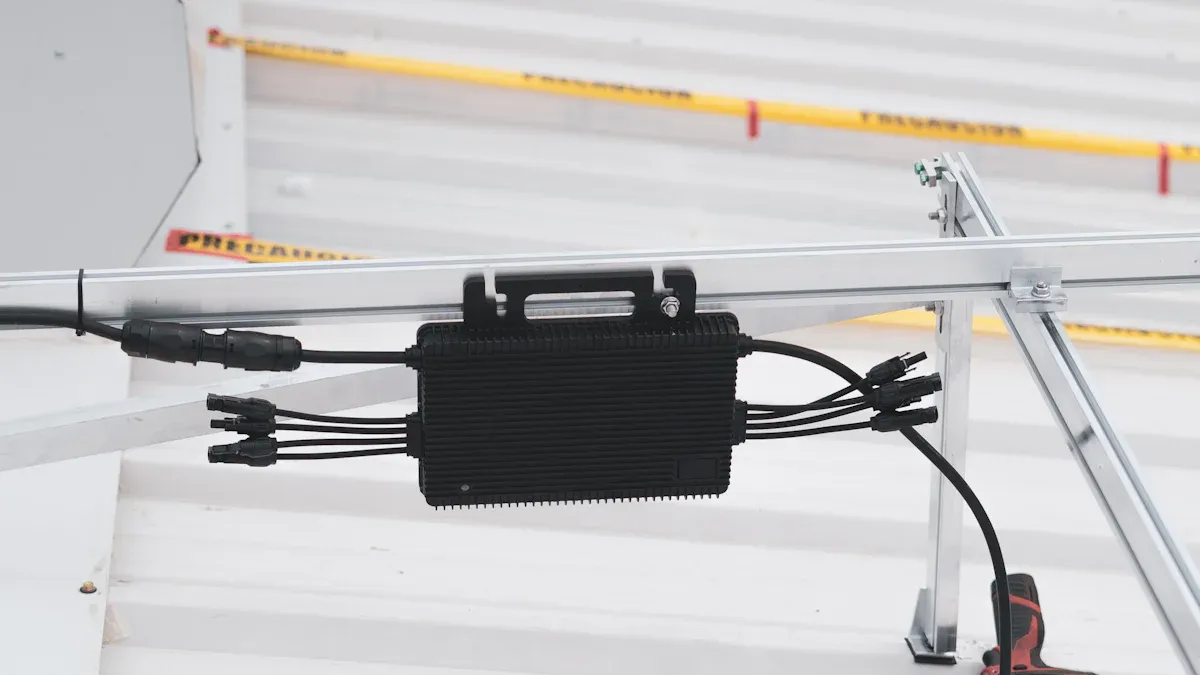
Sometimes, you need to go up a size when picking your solar cable. If you plan to add more panels in the future, a larger cable saves you from rewiring later. You should also use a bigger cable if your cable run is very long or if your system sits in a hot area. Heat can make wires less efficient, so a thicker cable helps keep things safe and cool. If you want to keep voltage drop as low as possible, choosing a larger solar cable is a smart move.
Tip: When in doubt, pick the next size up. It’s a small cost for extra safety and peace of mind.
Common Mistakes to Avoid
You want your solar setup to last. Watch out for these common mistakes:
- Guessing cable size instead of using a chart or calculator.
- Forgetting to measure the total length for both wires.
- Ignoring voltage drop, especially on long runs.
- Using old or damaged cables.
If you avoid these mistakes, your solar system will work better and last longer.
Quick-Reference Solar Cable Chart and Calculator Link
Here’s a handy chart for quick checks:
| System Voltage | Max Current (Amps) | Max Length (ft) | Cable Size (AWG) |
|---|---|---|---|
| 12V | 10 | 25 | 8 |
| 24V | 10 | 50 | 10 |
| 48V | 20 | 100 | 6 |
Want to double-check your numbers? Try this solar cable size calculator.
You now know how to pick the right solar cable for your system. Just remember to check your current, measure your cable length, and watch for voltage drop. Always use a solar cable size chart. Double-check your work. For big or tricky setups, talk to a solar expert.
FAQ
How do I know if my solar cable is too small?
If your cable gets hot or your system loses power, your cable might be too small. You should check your cable size with a chart or calculator.
Can I use regular electrical wire for solar panels?
You should not use regular wire. Solar cables handle outdoor weather and sunlight better. Always pick cables made for solar systems.
What happens if I use a bigger cable than needed?
Using a bigger cable is safe. It may cost more, but it helps lower voltage drop and keeps your system running well.