

 Send Email
 Whatsapp


Choosing the Right Solar Cable: 4mm or 6mm for Your Needs
Choosing the right Solar Cable ensures your solar system operates efficiently and safely. A cable that’s too small may overheat, while a larger cable could waste resources. You face an important decision: Should you go with 4mm or 6mm? Understanding these options helps you make the best choice for your setup.
Key Takeaways
- Use 4mm cables for small solar setups or short wires. They are cheaper and work well for low power needs.
- Pick 6mm cables for big systems or long wires. They carry more electricity and save energy, giving better results.
- Check your system's power and wire length before choosing. This keeps it safe, works well, and saves money.
Understanding Solar Cables
What are solar cables?
Solar cables are specialized wires designed to connect the components of your solar power system. These cables carry electricity generated by your solar panels to other parts of the system, such as the inverter or battery. Unlike regular electrical wires, solar cables are built to withstand outdoor conditions, including extreme temperatures, UV radiation, and moisture. Their durability ensures that your solar system operates reliably over time.
Key features of solar cables.
Solar cables come with unique features that make them suitable for renewable energy systems. They are highly flexible, making installation easier, even in tight spaces. Their insulation is double-layered to provide extra protection against environmental factors. These cables are also resistant to fire, ensuring safety in case of overheating. Additionally, they are designed to minimize energy loss during transmission, which helps improve the efficiency of your solar setup.
Why cable size matters in solar systems.
The size of your solar cable plays a critical role in the performance of your system. A cable that is too small may struggle to handle the current, leading to overheating and potential safety hazards. On the other hand, a cable that is too large can increase costs unnecessarily. Choosing the right size ensures that electricity flows efficiently, reducing energy loss and maintaining the safety of your system.
4mm vs. 6mm Solar Cables
Physical differences.
When comparing 4mm and 6mm Solar Cables, the most noticeable difference is their thickness. A 6mm cable has a larger diameter than a 4mm cable. This increased size allows it to carry more current without overheating. The thicker insulation on 6mm cables also provides better protection against environmental factors, such as UV rays and moisture. However, the added thickness makes 6mm cables less flexible, which can make installation slightly more challenging in tight spaces.
In terms of weight, 6mm cables are heavier than their 4mm counterparts. This difference might not seem significant, but it can add up if your solar system requires long cable runs. If you’re working on a project where weight and flexibility are critical, the 4mm cable might be a better fit.
Electrical properties and current capacity.
The electrical properties of a solar cable determine how efficiently it can transmit electricity. A 6mm cable has a higher current-carrying capacity compared to a 4mm cable. This means it can handle more electricity without overheating or causing energy loss. For example, a 4mm cable might safely carry up to 30 amps, while a 6mm cable can handle up to 50 amps, depending on the specific conditions.
Voltage drop is another important factor. Over long distances, electricity loses some of its power as it travels through the cable. A 6mm cable experiences less voltage drop than a 4mm cable, making it more efficient for longer runs. If your solar panels are far from your inverter or battery, the 6mm cable will help maintain the system’s performance.
Impact on system performance.
The size of your solar cable directly affects the performance of your solar system. A 4mm cable works well for smaller systems with shorter distances between components. It provides adequate current capacity without unnecessary costs. However, if your system generates higher power or requires longer cable runs, a 6mm cable ensures better efficiency and safety.
Using the wrong cable size can lead to problems. A 4mm cable in a high-power system might overheat, causing damage or even fire hazards. On the other hand, using a 6mm cable for a small system could increase costs without adding significant benefits. Choosing the right cable size ensures your system operates efficiently, safely, and cost-effectively.
Choosing the Right Solar Cable for Your System
System size and power output
The size of your solar system determines the type of cable you need. Larger systems generate more electricity, requiring cables that can handle higher currents. If your system produces a small amount of power, a 4mm Solar Cable may be sufficient. It can safely carry the current without overheating or causing energy loss. However, for systems with higher power output, a 6mm cable becomes essential. It offers greater capacity, ensuring your system operates efficiently and safely.
To make the right choice, evaluate your system's power output. Check the specifications of your solar panels and inverter. These details will help you understand the current your cables need to handle. Matching the cable size to your system's power ensures optimal performance and prevents potential hazards.
Distance and voltage drop considerations
Distance plays a crucial role in selecting the right solar cable. Electricity loses power as it travels through a cable, a phenomenon known as voltage drop. Longer distances increase this loss, which can affect your system's efficiency. A 6mm cable reduces voltage drop more effectively than a 4mm cable, making it ideal for setups where components are far apart.
Measure the distance between your solar panels, inverter, and battery. If the distance is short, a 4mm cable may work well. For longer runs, choose a 6mm cable to maintain consistent power delivery. This decision ensures your system performs reliably, even when components are spread out.
Tip: Use an online voltage drop calculator to estimate the loss over different cable sizes and distances. This tool helps you make an informed decision based on your setup.
Budget and cost-effectiveness
Your budget influences the choice between 4mm and 6mm solar cables. A 4mm cable costs less, making it a budget-friendly option for smaller systems or short distances. If your system requires longer runs or handles higher power, investing in a 6mm cable is more cost-effective in the long term. It prevents energy loss and reduces the risk of overheating, saving you money on repairs and replacements.
Consider the upfront cost and long-term benefits. While a 6mm cable may seem expensive initially, its durability and efficiency often outweigh the higher price. Evaluate your system's needs and balance cost with performance to make the best choice for your solar setup.
When to Use 4mm or 6mm Solar Cables
Best applications for 4mm cables
You should use 4mm solar cables for smaller solar systems or setups with short distances between components. These cables work well when your system generates lower power, such as in residential installations with a few solar panels. Their lighter weight and flexibility make them ideal for projects where space is limited or where frequent bends are required during installation.
Tip: If your solar panels are close to the inverter or battery, 4mm cables can save you money without compromising efficiency.
Best applications for 6mm cables
Choose 6mm solar cables for larger systems or setups with higher power output. These cables handle more current and reduce voltage drop over long distances. They are perfect for commercial solar installations or off-grid systems where components are spread out. If your system operates in harsh outdoor conditions, the thicker insulation of 6mm cables provides better protection against environmental factors.
Note: For systems with long cable runs or higher energy demands, 6mm cables ensure safety and reliability.
Real-world examples
Imagine you’re installing a small solar system for a cabin. The panels are close to the inverter, and the power output is modest. In this case, 4mm cables are sufficient. On the other hand, if you’re setting up a large solar farm with panels spread across a wide area, 6mm cables are the better choice. They handle the higher current and maintain efficiency over long distances.
A homeowner with a medium-sized system might use both types. For shorter runs between panels, 4mm cables work well. For longer runs to the inverter, 6mm cables prevent energy loss.
Installation Tips for Solar Cables
Proper handling and installation
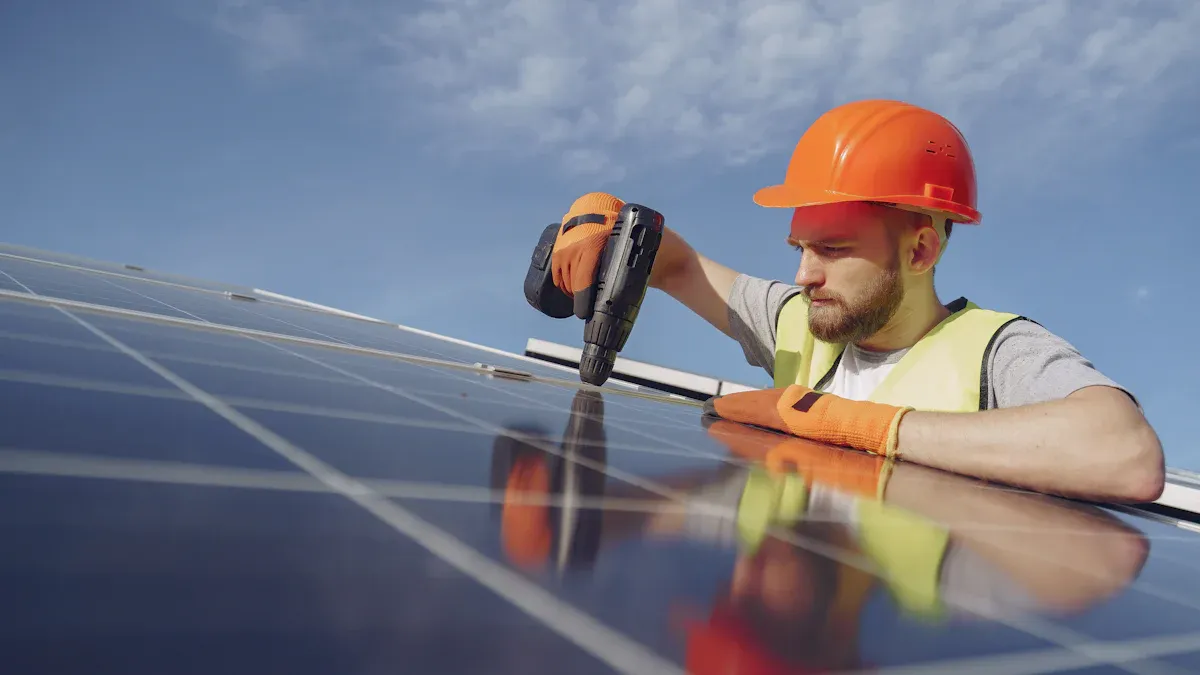
Handling solar cables correctly ensures their longevity and performance. Always inspect the cables before installation to check for any visible damage. Use tools like wire strippers and cutters designed for solar cables to avoid damaging the insulation. When laying the cables, avoid sharp bends or kinks, as these can weaken the wires over time.
Tip: Use cable ties or clips to secure the cables neatly. This prevents unnecessary strain and keeps them organized.
During installation, keep the cables away from areas prone to physical damage, such as walkways or areas with heavy foot traffic. If the cables need to pass through walls or other structures, use protective conduits to shield them from wear and tear.
Ensuring secure connections
Secure connections are vital for the safety and efficiency of your solar system. Ensure that all connectors are compatible with your cables and components. Push the connectors firmly until you hear a click, indicating a proper connection. Loose connections can lead to energy loss or overheating.
Note: Double-check each connection after installation to ensure it is tight and secure.
Labeling the cables can also help you identify them easily during maintenance or troubleshooting. This simple step saves time and reduces errors.
Maintenance for longevity
Regular maintenance keeps your solar cables in top condition. Inspect the cables periodically for signs of wear, such as cracks in the insulation or corrosion on the connectors. Clean the connectors with a dry cloth to remove dirt or debris that might affect performance.
Reminder: Replace damaged cables immediately to prevent safety hazards or system inefficiencies.
Protect the cables from pests by using rodent-proof conduits or covers. This precaution ensures your system remains reliable for years to come.
Choosing the right solar cable size ensures your system runs efficiently and safely. A 4mm cable suits smaller setups, while a 6mm cable handles higher power and longer distances. Evaluate your system’s power output and layout.
Tip: Consult a professional to confirm your choice and avoid costly mistakes.
FAQ
What happens if I use the wrong cable size?
Using the wrong size can cause overheating, energy loss, or system inefficiency. Always match the cable size to your system's power and distance requirements.
Can I mix 4mm and 6mm cables in one system?
Yes, you can mix them. Use 4mm for short runs and 6mm for longer distances or higher power areas to optimize performance.
Tip: Label mixed cables to avoid confusion during maintenance.
How do I calculate voltage drop for my solar cables?
Use an online voltage drop calculator. Input the cable size, distance, and current to estimate power loss. This helps you choose the right cable for your setup.
Emoji Tip: 🔌 Accurate calculations = efficient systems!