

 Send Email
 Whatsapp


what size cable for 10kw solar system

For a 10kW solar system, you should use a Solar Cable that handles high current safely. Most setups use 16mm² for DC and 6mm² for AC.
Using the right size prevents overheating, keeps your system efficient, and protects your property.
- DC cable: 16mm²
- AC cable: 6mm²
Key Takeaways
- Use a 16mm² DC cable and a 6mm² AC cable for a 10kW solar system. This ensures safety and efficiency.
- Always check the current rating and voltage drop. Keeping voltage drop below 3% helps maintain system performance.
- Choose cables designed for solar use with proper certifications like TUV or UL. This protects your system and ensures longevity.
Solar Cable Size Recommendations

DC Solar Cable Size for 10kW System
You need to choose the right DC solar cable size to carry the current from your solar panels to the inverter. For a 10kW solar system, most people use a 16mm² cable for the DC side. This size handles the high current safely and keeps your system running well.
Tip: Always check the current rating of your cable. If you use a cable that is too small, it can overheat and cause problems.
Here is a quick reference table for DC cable sizes:
| System Size | Typical DC Cable Size | Max Current (Approx.) |
|---|---|---|
| 5kW | 10mm² | 50A |
| 10kW | 16mm² | 80A |
| 15kW | 25mm² | 120A |
You should also look at the voltage drop. If your cable run is long, you may need a larger cable.
AC Solar Cable Size for 10kW System
On the AC side, the current is lower because the voltage is higher. For a 10kW solar system, a 6mm² AC cable is usually enough. This size works well for most home installations.
- Use a cable that matches your inverter output.
- Check local electrical codes for extra safety.
If you have a three-phase system, you may need to adjust the cable size. Always make sure your cable can handle the load.
Solar Cable Size for Different Run Lengths
The length of your cable run affects the size you need. Longer runs cause more voltage drop. You want to keep voltage drop below 3% for best performance.
Note: If your cable run is longer than 20 meters, you should use a larger solar cable to reduce losses.
Here is a simple guide:
- For runs up to 20 meters: Use the standard size (16mm² DC, 6mm² AC).
- For runs between 20 and 40 meters: Go up one size (25mm² DC, 10mm² AC).
- For runs over 40 meters: You may need even larger cables. Check with a professional.
A good solar cable choice keeps your system safe and efficient. Always plan your cable size based on both current and distance.
Key Factors Affecting Solar Cable Sizing
System Voltage (DC vs. AC)
You need to know the voltage of your system before picking a cable size. Solar systems use both DC and AC voltage. DC voltage comes from your solar panels and goes to your inverter. AC voltage comes out of your inverter and powers your home. Higher voltage means lower current for the same power. This lets you use a smaller cable. For example, a 10kW system at 1000V DC needs less current than one at 500V DC. Always check your system’s voltage before choosing a cable.
Current Calculation for Solar Cable
You must calculate the current your cable will carry. Use this simple formula:
Current (A) = Power (W) ÷ Voltage (V) For a 10kW system at 500V, the current is 20A. If your voltage is lower, the current goes up. Always round up your result to the next standard cable size. This keeps your solar cable safe and cool.
Distance and Voltage Drop
Cable length affects how much voltage you lose along the way. Longer cables lose more voltage. You want to keep voltage drop below 3%. If your cable run is long, pick a thicker cable. This helps your system stay efficient and safe.
Tip: Measure the distance from your panels to your inverter and from your inverter to your main switchboard. Use this to choose the right cable size.
How to Calculate Solar Cable Size
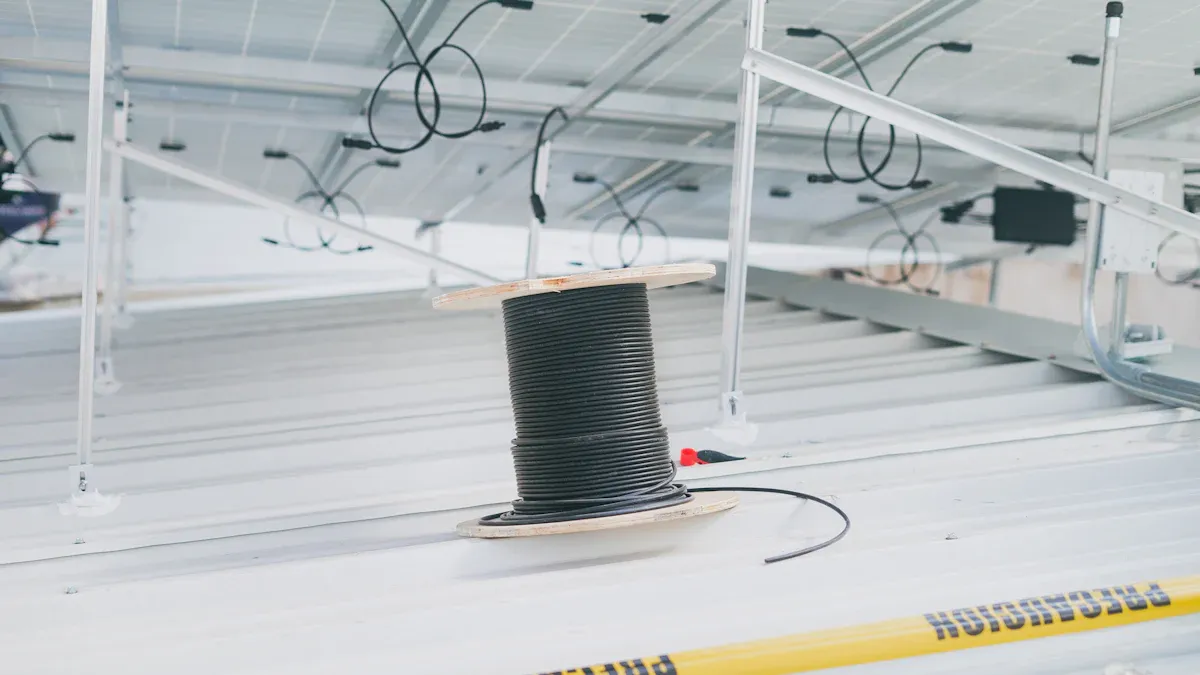
Simple Formula for Solar Cable Sizing
You can use a simple formula to find the right cable size for your solar system. This formula helps you check if your cable can handle the current and keep voltage drop low.
Cable Size (mm²) = (2 × Length × Current) ÷ (Conductivity × Allowable Voltage Drop) - Length: Distance from your panels to your inverter (in meters)
- Current: Amount of current your system produces (in amps)
- Conductivity: Use 56 for copper cables
- Allowable Voltage Drop: Usually 3% of your system voltage
Tip: Always round up to the next standard cable size for safety.
Example Calculation for 10kW Solar System
Let’s say you have a 10kW system with a 500V DC voltage and a 20-meter cable run. First, calculate the current:
Current = Power ÷ Voltage = 10,000W ÷ 500V = 20A Now, use the formula:
Cable Size = (2 × 20 × 20) ÷ (56 × 15) ≈ 0.95mm² But this number is too small for real-world use. You should always use at least a 16mm² solar cable for a 10kW system. This keeps your system safe and efficient.
Solar Cable Size Reference Table
Here is a quick table to help you choose the right cable size:
| System Size | Voltage | Max Current | Cable Run | Recommended Cable Size |
|---|---|---|---|---|
| 5kW | 500V | 10A | 20m | 10mm² |
| 10kW | 500V | 20A | 20m | 16mm² |
| 10kW | 500V | 20A | 40m | 25mm² |
| 15kW | 500V | 30A | 20m | 25mm² |
Always check your local codes before making a final choice.
Recommended Solar Cable Types and Standards
Suitable Solar Cable Types
You need to choose the right type of cable for your solar system. Not all cables work well for solar power. Some cables can break down in sunlight or get damaged by weather. You should look for cables made for outdoor use and high temperatures.
Here are some common types you can use:
- PV1-F: This cable works well for solar panels. It resists UV rays and handles high heat.
- XLPE-insulated cable: This type lasts a long time and does not melt easily.
- Twin core solar cable: You can use this for both positive and negative connections.
Tip: Always pick cables with thick insulation. This keeps your system safe from water and sunlight.
Safety Standards and Certifications
You must check that your cables meet safety standards. Certified cables protect your home and help your system last longer. Look for these marks on your cables:
| Standard/Certification | What It Means |
|---|---|
| TUV | Tested for solar use |
| UL | Meets U.S. safety rules |
| Iec 62930 | International solar cable standard |
You should always use cables with these certifications. They show that the cable passed strict tests for safety and quality.
Note: Using certified cables can help you pass inspections and avoid problems later.
Common Mistakes in Solar Cable Selection
Risks of Undersizing Solar Cable
If you choose a cable that is too small, you put your system at risk. A thin cable cannot carry enough current for your solar panels. This can cause the cable to overheat. Overheating may lead to melted insulation or even fire. You also lose energy as heat, which lowers your system’s efficiency. Always check the current rating before you pick a cable size.
⚠️ Undersized cables can damage your equipment and create safety hazards. Always use a cable that matches or exceeds your system’s needs.
Ignoring Voltage Drop in Solar Cable
Many people forget to consider voltage drop. When electricity travels through a long cable, some voltage gets lost. If you ignore this, your solar panels will not work as well. You may notice lower power output or even inverter errors. To avoid this, measure the distance from your panels to your inverter. Use a cable size that keeps voltage drop below 3%. This helps your system run smoothly.
Using Non-Compliant Solar Cable Types
Not all cables are made for solar use. Some cables break down in sunlight or cannot handle outdoor weather. If you use the wrong type, your system may fail early. Always look for cables with proper certifications like TUV or UL. These cables last longer and keep your system safe.
✅ Choose cables designed for solar systems. Check for certifications before you buy.
Practical Tips for Choosing Solar Cable
Solar Cable Selection Checklist
You want your solar system to work safely and efficiently. Use this checklist to help you pick the right cable:
- Check the power rating of your solar system.
- Measure the distance from your panels to your inverter.
- Calculate the current your system will carry.
- Choose a cable size that matches or exceeds your current needs.
- Make sure the voltage drop stays below 3%.
- Pick a cable type made for outdoor and solar use.
- Look for safety certifications like TUV or UL.
- Follow local electrical codes and rules.
Tip: Always double-check your numbers before you buy any cable. Mistakes can lead to safety risks or poor system performance.
When to Consult a Professional
You should ask a licensed electrician or solar installer for help if you feel unsure about any step. Professionals know how to handle complex setups and long cable runs. They can spot problems you might miss. If your system is larger than 10kW or your cable run is very long, expert advice becomes even more important. You also need a professional if your local codes require it.
Remember: A professional can help you avoid costly mistakes and keep your solar system safe.
You should use a 16mm² DC cable and a 6mm² AC cable for your 10kW solar system. Always check current, voltage, and cable length.
Careful planning keeps your system safe and efficient.
Final checklist:
- Confirm system size
- Measure cable run
- Choose certified solar cable
FAQ
What happens if you use a cable that is too small for your solar system?
You risk overheating, energy loss, and possible fire. Always choose a cable that matches your system’s current and distance needs.
Can you use regular electrical wire for solar panels?
No. You need solar-rated cables. These cables resist UV rays and weather. Regular wires may fail outdoors and cause safety issues.
How do you check if your solar cable is certified?
Look for labels like TUV, UL, or IEC on the cable. Certified cables meet strict safety and quality standards.