

 Send Email
 Whatsapp


What size solar system does the average house need?
The size of the solar system your home needs depends on how much energy you use and where you live. A typical U.S. household with average energy consumption often requires a 6-8 kW system. Factors like sunlight, roof size, and the efficiency of your panels, along with Solar Cable requirements, also influence the system size.
Key Takeaways
- Look at your monthly energy use to decide solar size. Check your electricity bills to see how many kilowatt-hours (kWh) you use.
- Think about how much sunlight your area gets. More sun means your panels make more energy, so you might need fewer panels.
- Learn about local rules and utility policies. Knowing about permits and net metering can save money and make installation easier.
Factors that influence solar system size
Energy consumption and monthly usage
Your energy consumption plays a major role in determining the size of your solar system. Start by looking at your electricity bill to find your average monthly usage in kilowatt-hours (kWh). Homes with higher energy needs, such as those with electric heating or multiple appliances, require larger systems. On the other hand, smaller households or energy-efficient homes can often make do with smaller systems. Understanding your energy habits helps you choose a system that meets your needs without overspending.
Sunlight availability and peak sun hours
The amount of sunlight your location receives directly impacts how much energy your solar panels can produce. Areas with more peak sun hours allow smaller systems to generate the same amount of electricity as larger systems in less sunny regions. For example, homes in sunny states like Arizona or California may need fewer panels compared to homes in northern states. Knowing your local peak sun hours helps you estimate how efficiently your system will perform.
Roof space, orientation, and panel efficiency
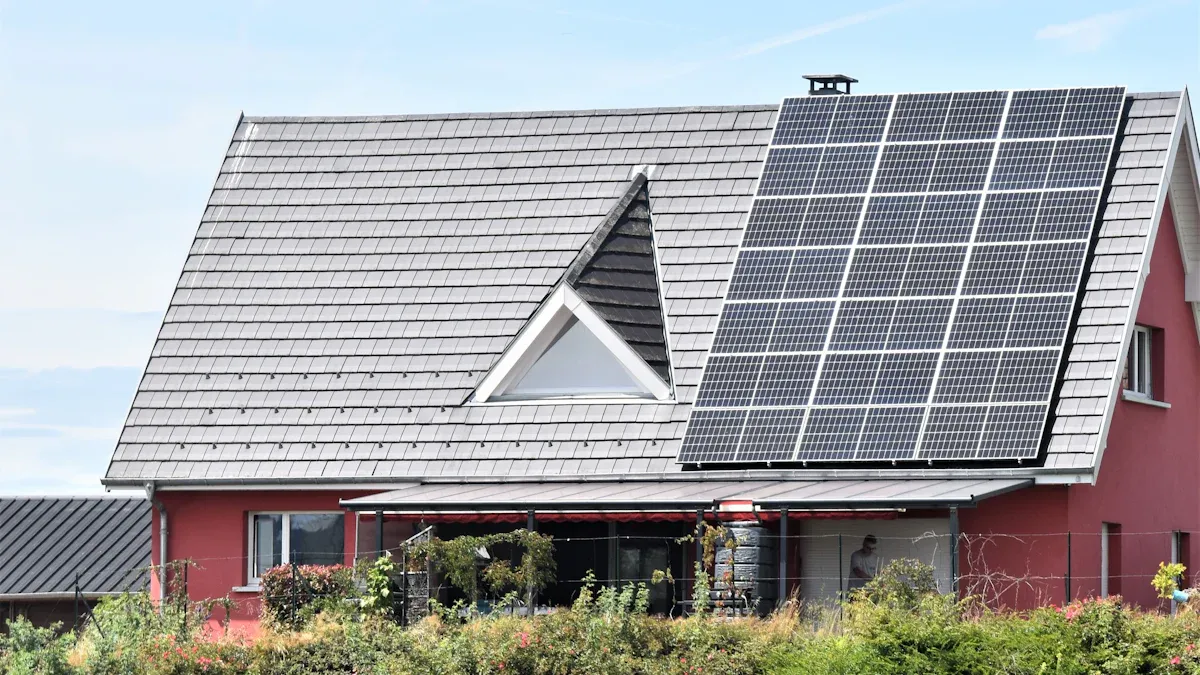
Your roof’s size and orientation affect how many panels you can install. A larger roof provides more space for panels, while a south-facing roof captures the most sunlight in the U.S. Panel efficiency also matters. High-efficiency panels generate more power in less space, making them ideal for smaller roofs. Additionally, you’ll need to consider solar cable placement to ensure the system operates effectively.
Utility regulations and net metering policies
Utility companies often have rules about how much solar energy you can produce and feed back into the grid. Net metering policies allow you to earn credits for excess energy your system generates. These credits can offset your electricity costs when your panels aren’t producing enough power. Check your local utility regulations to understand how they might influence your system size and overall savings.
Calculating the size of your solar system
Step 1: Assess your average monthly energy usage
Start by reviewing your electricity bills to find your average monthly energy usage in kilowatt-hours (kWh). This number gives you a baseline for how much power your solar system needs to generate. For example, if your household uses 900 kWh per month, you’ll need a system that can produce roughly the same amount of energy. Keep in mind that energy-efficient appliances or habits can reduce your overall usage, potentially lowering the size of the system you need.
Step 2: Determine peak sun hours in your location
Peak sun hours measure the amount of sunlight available for solar energy production in your area. One peak sun hour equals one hour of sunlight strong enough to produce 1,000 watts of power per square meter. Locations with more peak sun hours, like southern states, allow your panels to generate more energy. You can find this information online or by consulting a solar professional. Knowing your peak sun hours helps you estimate how efficiently your system will perform.
Step 3: Use a formula to estimate system size
To calculate the size of your solar system, use this simple formula:
System Size (kW) = Monthly Energy Usage (kWh) ÷ (Peak Sun Hours × 30) This formula divides your monthly energy needs by the total sunlight your panels receive in a month. The result gives you an estimate of the system size required to meet your energy demands.
Step 4: Example calculation for a typical home
Let’s say your home uses 900 kWh per month, and your location receives 5 peak sun hours daily. Using the formula:
System Size = 900 ÷ (5 × 30) = 6 kW In this case, a 6 kW system would likely meet your energy needs. If your roof space is limited, you might consider high-efficiency panels or optimizing solar cable placement to maximize energy production.
Practical considerations for installation
Roof suitability and solar cable requirements
Your roof plays a critical role in solar panel installation. A sturdy roof with adequate space ensures your system performs efficiently. Roofs with a south-facing orientation capture the most sunlight, but east- or west-facing roofs can also work well. If your roof has limited space, high-efficiency panels can help maximize energy production.
Solar cable placement is another important factor. These cables connect your panels to the inverter and the rest of your system. Proper placement ensures smooth energy transfer and reduces power loss. You should consult a professional installer to determine the best cable layout for your roof.
Cost, incentives, and return on investment
Solar systems require upfront costs, but incentives can reduce your expenses. Federal tax credits, state rebates, and local programs often cover a portion of the installation cost. These savings make solar more affordable for homeowners.
Over time, solar panels can lower your electricity bills. Many systems pay for themselves within 6-10 years. You should calculate your potential savings and compare them to the initial investment. This helps you understand the long-term financial benefits of going solar.
Local regulations and permits
Before installing solar panels, you need to check local regulations. Many areas require permits for solar installations. These permits ensure your system meets safety standards and complies with zoning laws.
Utility companies may also have specific rules for connecting your system to the grid. Net metering policies, for example, allow you to earn credits for excess energy. Understanding these regulations helps you avoid delays and maximize your savings.
The size of your solar system depends on energy usage, sunlight availability, and roof space. Most homes need a system between 5 kW and 10 kW. A 6-8 kW system suits average energy needs.
Use solar calculators or consult professionals for accurate estimates. Solar panels reduce costs and help protect the environment. 🌞
FAQ
How do I know if my roof is suitable for solar panels?
You can check your roof's orientation, size, and condition. South-facing roofs work best. A professional installer can assess your roof's suitability.
Can solar panels work during cloudy days?
Yes, solar panels still generate electricity on cloudy days. However, their efficiency decreases. High-efficiency panels perform better in low-light conditions.
What happens if my solar system produces more energy than I use?
Excess energy often goes back to the grid. With net metering, you can earn credits for this surplus, reducing your future electricity bills.